Paper Machine Types and Key Components in Pulp and Paper
Introduction:
Pulp and paper industry is an important part of manufacturing in the world as it provides the basic components of packaging, printing, tissue products and industrial use. The core of this industry is made out of state- of-the- art paper making machines which convert pulp fibers into completed paper sheets with a multi-complicated chain of mechanical and chemical processes. The modern industrial pulp and paper machines are high-level automated machines that aim at providing high production efficiency, quality, and low cost of operation.
Knowledge on the nature of the paper making machines, the paper machine parts that propel the paper making process is important to industry players in the pulp mills, paper mills, engineering corporations and equipment manufacturing companies. Every part of a paper machine performs a certain role and the cooperation of all parts with each other defines the overall performance of a machine.
The article gives a detailed discussion of the different paper making machines, sections and parts of the paper machine, and key components of the machine in the paper manufacturing industry. It also explains the distinction between the paper machine sections and components which assist the professionals in the industry to understand the structure and functioning of industrial paper machinery better.
Overview of Industrial Paper Machinery
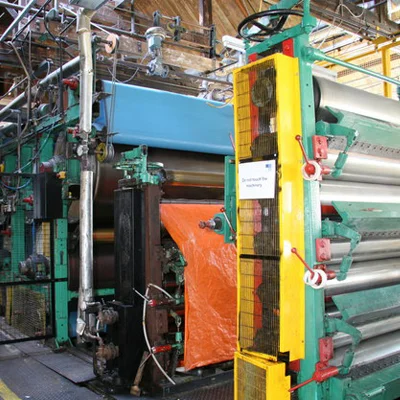
Manufacturing papers is based on the use of huge paper mill machines which continuously produce paper slurry turned into finished paper rolls. These machines are commonly hundreds of meters in length and have several incorporated parts that form, press, dry and finish the piece of paper.
Pulp production modern industrial paper machine equipment has applied mechanical engineering, fluid dynamics, process control system, and automation technologies. The paper mills can operate based on the production needs with different configurations of machines that will be optimized towards a particular paper grade like packaging, tissue, or printing paper.
The construction and functionality of industrial paper machinery directly determine the speed of production, energy use and the quality of the final product.
Types of Paper Making Machines
The various production requirements have resulted in coming up with various varieties of paper making machines that are used in the paper mills across the globe. Each of them is intended to be used with certain properties of pulp, volumes of production and grades of papers.
Fourdrinier Paper Machine
Fourdrinier machine is one of the most prevalent paper mill machines today in the industry. It manufactures paper by pouring a dilute pulp slurry onto a wire mesh akin to moving water whereby, the water is drained out and the remaining fibers create the paper sheet.
The fourdrinier machines are popularly applied in the production of printing paper, writing paper, and packaging material. They are also a necessity in the pulp and paper machines of the present-day industry because they are able to make a continuous sheet of paper and do it in large volumes of production.
Cylinder Mould Paper Machine
The cylinder mould machine is mainly used to make paper grades that are heavier like cardboard and specialty paper products. Rotating cylinders that have wire mesh collect pulp fibers in vats and create layers of pulp in paper as opposed to using a flat wire.
The machines are also commonly utilized in smaller mills or specialty production where layered paper structures will be necessary.
Twin Wire Paper Machine
Twin wire machines involve two pieces of forming fabric, which are placed between the pulp slurry. This design enhances the efficiency of sheet formation and drainage and can be used to make the production speed and paper uniformity high.
Twin wire systems have been extensively used in large capacity industrial paper machinery whereby speed and consistency of product is of utmost importance.
Tissue Paper Machine
Tissue paper machines are special paper making machines that are used to manufacture lightweight and extremely absorbent paper products including toilet tissue, napkins, and paper towels. These machines have high speed drying systems as well as creping technology to attain softness and absorbency.
Understanding Paper Machine Sections and Parts
There are paper machine sections and parts that are the typical divisions of a paper machine. The process involves each section having its own step in the manufacturing of paper where gradual changes are carried out on the pulp slurry to form the finished paper.
Headbox Section
Most paper mill machines start with the headbox. It uniformly sprays the dilute pulp slurry in the forming wire in order to have uniformly formed sheets.
At this stage, it is important to accurately control fiber distribution since it will define the thickness of paper, strength and consistency. New headboxes have sophisticated flow control that controls the turbulence and fiber orientation.
Forming Section
It is during the forming part that the pulp slurry starts to be turned into a continuous sheet. The water passes in the wire mesh and fibers are interlocked to form the original structure of papers.
This part is important in the establishment of physical properties of the paper such as porosity, smoothness of the surface, and bonding of the fibers.
Press Section
Once formed, the paper sheet goes into the section of press where a mechanical pressure gets rid of extra water. The sheet is pressed between large roll presses between felts to reduce moisture content, and make the sheet denser.
Effective presses enhance energy efficiency since little moisture would have to be removed during the drying process.
Drying Section
The drying section has a series of heated cylinders where the paper sheet takes away the water trace left behind. Dryers with steam slowly dry the sheets by heating them.
In the current industrial paper manufacturing, the high-level heat recovery systems enhance energy savings in the drying process.
Calender Section
The calender part presses and squeezes the sheet of paper between polished rollers. This procedure improves quality of surfaces, printability and thickness of paper.
The system of high-performance calendering is the key to manufacturing the superior quality paper products.
Reel Section
The last process of most industrial pulp and paper machines is the reel section; here the finished piece of paper is rolled into large reels. These rolls are then reduced to small sizes that can be commercially distributed.
Key Machine Components in Paper Manufacturing Industry
Whereas machine sections symbolize the process stages, paper machine components are the parts of the machine that are the individual mechanical components that do the particular task in one section. Knowledge of these elements is vital to maintenance, optimization of equipment, and efficiency.
The headboxes, forming wires, press rolls, dryer cylinders, suction boxes, felts, and calender rolls are important key machine components in paper manufacturing industry.
Every component plays a role in a certain section of the paper making. In the following, an example is given of the wires being formed as part of the fiber forming, press rolls are used to squeeze out the moisture, and dryer cylinders evaporate the water.
The functionality of the industrial paper machine equipment in the production of pulp depends on the performance of these components.
Difference between Paper Machine Sections and Components
Professionals in the industrial field tend to use interchangeably the terms sections and components. Nevertheless, the distinction between paper machine sections and components is apparent.
| Aspect | Paper Machine Sections | Paper Machine Components |
| Definition | Major process stages in a paper machine | Individual mechanical parts within each section |
| Purpose | Perform sequential steps in paper production | Enable specific functions within sections |
| Examples | Forming section, press section, drying section | Press rolls, forming wires, suction boxes |
| Scope | Large operational zones | Small mechanical elements |
The knowledge of this differentiation enables engineers, operators, and equipment suppliers to communicate better regarding the subject of industrial paper machinery.
Industrial Paper Machine Equipment for Pulp Production
Pulp has to be processed and prepared before the formation of paper sheets. Pulp production industrial equipment featuring paper machines are those that take raw materials like wood chips or scrap paper and transform these raw materials into workable pulp fibers.
Pulp production machinery is common as the digesters, refiners, screening equipment and bleach facilities. These are machines that combine fibers in order to bond effectively in the process of forming sheets.
The quality of pulp is an important factor in determining the performance of the paper mill machines and thus upstream equipment is also very important in the manufacturing process as a whole.
Integration of Automation in Industrial Pulp and Paper Machines
Pulp and paper machines that are used in modern industries are becoming automated and digitally monitored. Included in the advanced sensors are those that track parameters like fiber consistency, moisture levels, sheet thickness and machine speed.
Automation technology enhances the stability of processes, minimizes waste, as well as optimizes the use of energy. A lot of current paper mills have integrated control systems, which link the paper machine components through the whole production line.
Industrial paper machinery also provides predictions of wear and tear in equipment, avoiding the expensive equipment breakdowns.
Operational Checklist for Paper Machine Performance
To ensure the operation of paper making machines, it is important to maintain the machine sections and components by frequently inspecting and monitoring them. The operators usually concentrate in the headbox fiber distribution, drainage in the forming section, water content at the end of the press section, and in the drying cylinders temperature.
When these parameters are observed, the running of the paper mill machines is done smoothly and the quality of paper remains constant.
Regular maintenance of the parts of the paper machine like press rolls, forming fabrics, dryer cylinders and so on allows to prolong the equipment maintenance period and minimize down time.
Industry Challenges and Opportunities
The pulp and paper industry in the world today is under increasing pressure on the need to enhance sustainability and minimally impact the environment. Water consumption, energy use and sourcing of fiber are the top issues of paper manufacturers.
To overcome these problems, equipment manufacturers are building more efficient industrial paper machine equipment to convert pulp with the least consumption of energy and emission.
The innovation in industrial pulp and paper machines also entail energy-saving drying systems, closed-loop water system, and better fiber recovery technology.
The design and operation of paper making machines are also being digitalized and made smart through digitalization and smart manufacturing and allow making more products with more efficiency and managing their resources.
Frequently Asked Questions about Paper Machines
What are the main sections of a paper machine?
A common arrangement of a paper machine consists of headbox, forming section, press section, drying section, calender section, and reel section.
Why are paper machine components important?
Single parts of the paper machiner make each phase of the manufacturing process to be reliable and effective. The performance of the components has a direct impact on the paper quality and machine productivity.
How do industrial paper machines improve production efficiency?
Pulp and paper machines in the modern world use automation systems, high speed forming technology and energy saving drying machines to enhance productivity and lower the cost of operation.
Conclusion
The industrial process of paper production is highly sophisticated and it is facilitated by the industrial paper machinery as well as well-designed machine systems. The knowledge of the paper making machines, sections and parts of paper machines is very insightful on how paper pulp is made into the final paper products.
It is also crucial to distinguish between paper machine sections and components where each has a specific role in ensuring the quality of the products and the work of the machines. Since the creation of wires and press rolls, drying cylinders and calender systems, all the elements lead to the effective functioning of paper mill machines.
With the ongoing development of the pulp and paper industry, the advances of industrial equipment of paper machines to produce pulp will promote the processes of sustainability, automation, and efficiency in production. In the case of industry professionals who, equipment makers, and technology providers, the close knowledge of important machine components in the paper manufacturing industry is necessary to streamline production and increase the demand of paper products across the globe.
 Our Services
 Media Pack Download
 Newsletters
 Industrial Events