Paper Converting Machinery: Technologies Shaping Modern Paper Production
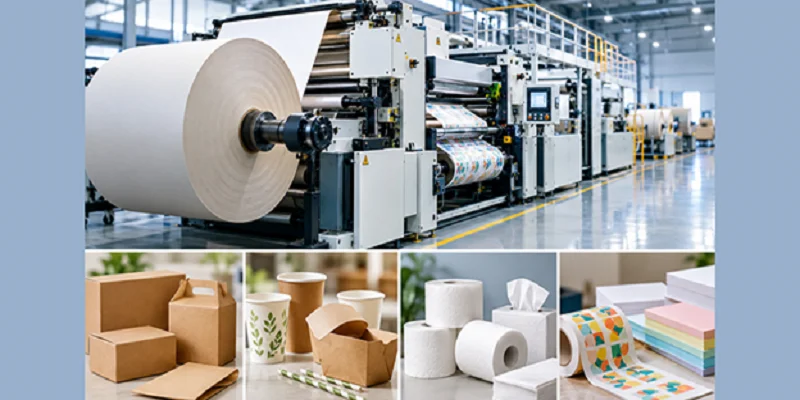
Every paper cup, shipping box, tissue roll, and paperback you've touched today started life as a giant, unwieldy reel of paper. Something had to turn that reel into a product you'd actually use, and that something is paper converting machinery.
The paper mill gets most of the credit, but the real transformation happens downstream. Converting is where raw paper becomes packaging, hygiene products, labels, and stationery. And that stage is changing fast.
Whether you run a plant, buy equipment, or are just curious how everyday paper products get made, this guide covers what converting machinery does, which technologies are reshaping it, and how to choose well.
What Is Paper Converting Machinery?
Paper converting machinery is the set of machines that turn large rolls or sheets of paper into finished or semi-finished products by cutting, folding, printing, laminating, coating, embossing, or gluing. These machines are also called paper converting machines, paper converting equipment, or paper processing equipment, depending on the region and industry.
Paper mills make the paper. Converting lines make it useful.
A quick way to picture it: a paper mill produces a jumbo roll several meters wide. A converting line slits that roll into narrower reels, prints a design on it, cuts and folds it, and delivers a stack of paper bags at the other end.
Why Converting Machinery Matters More Than Ever
Three forces are pushing this industry hard right now.
E-commerce keeps growing. Every parcel needs a box, a mailer, or protective wrap, and online retailers want more of it, faster.
Plastic is on the way out. Regulations and shopper preferences are pushing brands toward paper cups, paper straws, and paper-based food packaging. That has created a surge in demand for reliable industrial paper machinery.
Margins are tight. Paper prices swing, labor is expensive, and customers want shorter runs with faster turnaround. The equipment on your floor decides whether you can keep up.
The Main Types of Paper Converting Machines
Here's a quick overview of the core categories of converting machinery.
| Machine type | What it does | Typical products |
| Slitter rewinders | Cut large rolls into narrower reels | Tissue, label stock, packaging paper |
| Sheeters | Cut rolls into flat sheets | Printing paper, cardboard blanks |
| Die-cutting machines | Cut shapes using dies | Boxes, labels, cups |
| Folding and gluing machines | Fold and bond panels | Cartons, envelopes |
| Laminating and coating units | Add layers or barrier finishes | Food packaging, cups |
| Embossing machines | Add texture or patterns | Tissue, napkins, specialty paper |
| Bag-making machines | Form and seal paper bags | Retail and grocery bags |
| Tissue converting lines | Roll, cut, fold, and pack | Toilet paper, kitchen towels, facial tissue |
Most factories use several of these together, and the way they're linked determines efficiency.
Modern Paper Converting Machinery Technologies Worth Knowing
This is where things get interesting. Machines that were purely mechanical a decade ago now behave more like smart, connected systems. Here are the shifts making the biggest difference.
1. Servo-driven automation
Older lines relied on mechanical gears and cams, which meant changeovers took hours. Servo motors let each section of the machine be controlled independently and digitally.
The payoff: changeovers that once took half a shift now take minutes, which suits the short, varied orders customers want today.
2. AI-powered vision and quality inspection
Cameras mounted along the line scan every meter of web, and software flags print defects, cuts that are slightly off, holes, and color drift in real time.
Instead of discovering a bad batch after 10,000 units, operators catch problems in the first few seconds. That means less waste and fewer angry customer calls.
3. Industry 4.0 and IoT connectivity
Sensors now track speed, temperature, tension, vibration, and output on many latest paper converting machinery models. The data flows into dashboards that show performance across the whole plant.
The most valuable use is predictive maintenance. Rather than waiting for a bearing to fail mid-shift, the system notices unusual vibration and schedules a fix during planned downtime. Unplanned stoppages are among the costliest problems in any plant, so this matters.
4. Hybrid digital and flexo printing
Traditional flexographic printing is excellent for long runs. Digital printing is excellent for short, customized ones. Increasingly, converting lines combine both, so a single machine can handle a 200,000-unit order in the morning and a personalized 500-unit run in the afternoon.
For brands chasing seasonal packaging and limited editions, that flexibility is a big deal.
5. Energy-efficient drives and heating
Energy is a major operating cost. Newer machines use high-efficiency motors, better heat recovery, and smarter drying systems. Some plants report noticeable reductions in electricity use simply by upgrading older drives.
6. Sustainable and water-based coating systems
As plastic-lined paper faces scrutiny, machine makers are adapting. Equipment now handles water-based barrier coatings and plastic-free alternatives that keep paper cups and food wraps recyclable.
7. Robotics and automated handling
Palletizing, roll loading, and stacking are heavy, repetitive jobs. Robots and automated guided vehicles now take over many of them, which improves worker safety and keeps lines running consistently across shifts.
8. Modular and quick-change design
Instead of buying a fixed line, manufacturers can increasingly choose modular paper conversion equipment, adding a unit for embossing, perforating, or laminating as their product range grows. It's a lower-risk way to expand.
Real-World Example: What Upgrading Can Look Like
Picture a mid-sized tissue manufacturer running a decade-old line. Changeovers take around two hours, defects are only found at final packing, and breakdowns happen without warning.
After moving to servo-controlled converting with inline vision inspection and condition monitoring, the same plant could plausibly see shorter changeovers, less scrap, and far fewer surprise stoppages. The exact numbers vary by plant, but the pattern is common: the biggest wins come from removing waste and downtime, not only from raw speed.
How to Choose Paper Converting Equipment for Industrial Production
Buying paper converting equipment for industrial production is a long-term commitment. A few questions will keep you out of trouble.
1. What are you actually making?
Start with the product and the volume. A machine perfect for high-speed toilet tissue is wrong for custom folding cartons.
2. How much variety do you need?
If you run many SKUs and short jobs, prioritize quick changeover and digital flexibility. If you run a few products in enormous volumes, prioritize speed and stability.
3. What's the real cost of ownership?
Purchase price is only the start. Compare energy use, spare parts availability, maintenance needs, and expected lifespan.
4. Can it grow with you?
Modular machines and upgradable controls protect you if your product mix changes.
5. What support comes with it?
Check for local service engineers, training, and remote diagnostics. A great machine with poor support becomes a bad purchase quickly.
6. Is it ready for your sustainability goals?
If your customers are moving to plastic-free packaging, make sure the equipment handles the required coatings and materials.
Common Mistakes to Avoid
- Chasing top speed only. A fast machine that jams constantly is slower than a steady one.
- Ignoring operator training. Advanced converting machinery is only as good as the people running it.
- Skipping maintenance planning. Even smart machines need routine care.
- Overlooking integration. A great machine that can't talk to your existing lines creates bottlenecks.
What's Next for Converting Machinery?
Expect more of the same, but faster. Machine learning will get better at tuning settings automatically. Digital twins will let engineers test a new job virtually before running it. Fully connected "lights-out" lines will inch closer to reality for high-volume products.
The direction is clear: smarter, more flexible, and greener.
Frequently Asked Questions
What does paper converting machinery do?
It transforms large paper rolls or sheets into finished products through processes such as slitting, cutting, printing, folding, laminating, and embossing.
What's the difference between paper converting and papermaking?
Papermaking produces the paper itself from pulp. Converting turns that paper into usable products like bags, cartons, cups, and tissue.
What are the main types of paper converting machines?
Common types include slitter rewinders, sheeters, die-cutters, folder-gluers, laminators, embossing machines, bag makers, and tissue converting lines.
What are the latest technologies in paper converting machinery?
Key advances include servo automation, AI vision inspection, IoT-based predictive maintenance, hybrid digital-flexo printing, energy-efficient drives, robotic handling, and equipment designed for sustainable coatings.
How do I choose the right paper converting equipment?
Match the machine to your product, volume, and variety of orders, then compare total cost of ownership, upgrade options, and after-sales support.
Is automated converting machinery worth the investment?
For most manufacturers, yes. Savings come from less waste, faster changeovers, lower labor strain, and fewer unplanned stoppages, though payback depends on your volumes and current setup.
Final Thoughts
Paper converting machinery may not be glamorous, but it's the quiet engine behind packaging, hygiene, and printing. The plants that thrive are investing in smart, flexible, energy-aware modern paper converting machinery technologies while keeping their teams trained and their maintenance disciplined.
If you're planning an upgrade, start small: audit your biggest sources of waste and downtime, then pick the technology that solves those first.
 Our Services
 Media Pack Download
 Newsletters
 Industrial Events