Latest Technologies in Wood Preparation for Quality Pulp
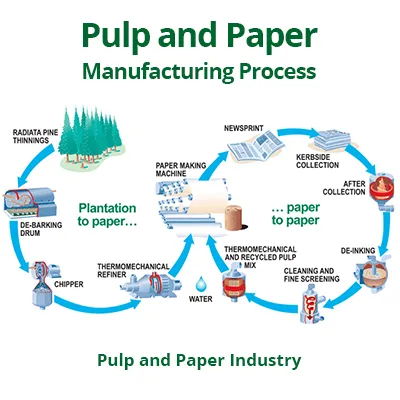
Quality starts long before chemical pulping stage in the pulp and paper industry of the present age; it starts in the forest, and in more detail, about the way in which the wood is prepared. The careful process of preparation of wood to high-quality pulp production has developed into a high technology science that is based on efficiency, sustainability, and fiber integrity. As the demand of high quality paper products is increasing and the environmental standards are becoming stricter, the center of the stage belongs to the way that the state-of-art pulp mills are changing their pulpwood preparation procedures to achieve excellence at the initial stage only.
And, hence, what are the most recent technologies to prepare wood to quality pulp and how do they transform the industry?
Redefining the Fundamentals: The Value of Contemporary Wood Preparation

Pulpwood preparation comes up in essence to transformational of raw logs into uniform feed material to be used to pulp. This comprises wood debarking facility, system of log chippings, and even optimization of fibers in pulping to allow uniformity in size, cleanness and length of fibres. The end result? In the attempts to get the most yield, minimize chemical consumption, as well as enhance the strength and the looks of the end product.
However, the techniques and technologies which are proving this change are far from conventional. We may go into greater depth about how cutting-edge technologies like wood prep line automaters for pulp production and advanced debarking equipment for pulp wood are poised to revolutionize the industry.
The Evolution of Wood Debarking: Cleaner Logs, Higher Yields
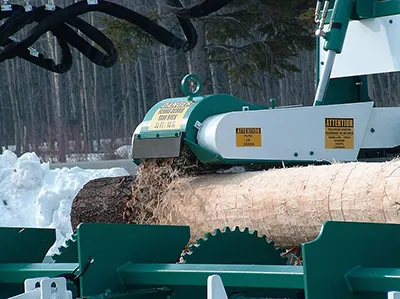
The time that debarking wood equaled high wear, energy intensive and intermittent bark removal is over. Pulp mills have today advanced wood debarking technologies that make sure that logs go into the pulping stage with little contaminants. Not only are these modern debarkers kinder to the logs, but are also designed to leave logs with as much fiber intact and minimum damage.
Mills can now track and compensate a bark content in real-time with technologies like the ring debarkers or the rotor debarkers smart sensors. This helps in preparing wood to manufacture high-quality pulp without wastage of fiber via cleaning off the wood-bark.
This step's further purification suggests less equipment downtime and a cleaner, brighter pulp that requires less bleaching, making it ultimately less expensive and more ecologically friendly.
Precision in Motion: Advancements in Log Chipping Systems
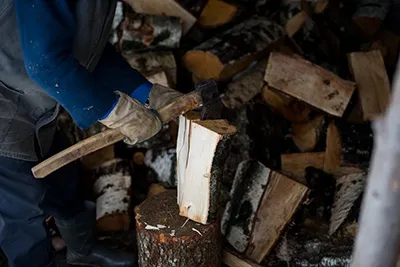
The next decisive step that logs undergo after debarking is chipping. There have been a surging innovation in log chipping systems, particularly with the implementation of intelligent automation and analytics.
Cuts angles, rotor speed control and in-feed optimization with AI processing are being added to the traditional disc and drum chippers. These wood chipping methods provide controlled geometry in chipping that is very vital in producing consistent chips when pulping. Irregular chips may result into either over cooked or under cooked parts and reduce pulp quality.
Current log chipping arrangements are therefore aimed at generating matching chip size and minimum level of fines and overs which are a precursor to optimization of fiber in the pulping process - and is also a pinnacle in terms of creating stronger and homogenous paper.
Inside the Tech: Comparing Traditional vs. Smart Wood Prep Lines
| Feature | Traditional Prep Lines | Automated Wood Prep Lines for Pulp Production |
| Control Mechanism | Manual adjustment | AI-based sensors & automation |
| Chip Size Uniformity | Medium | High |
| Bark Removal Efficiency | Moderate | Very High |
| Energy Efficiency | Low | Optimized via smart systems |
| Fiber Loss | High due to damage | Minimal due to precision |
The huge jump that the automated wood prep lines took in the production of pulp becomes visible in this table. These systems utilize real time inputs by use of bark scanners, chip analyzers as well as weight sensors in the optimization of throughput and control of variability of logs. The result? Improved fiber optimization in pulping, higher throughput, and better uniform chip quality.
Innovative Wood Processing for Pulp Mills: Blending Sustainability and Efficiency

Development of wood processing to pulp mills means not only technical progress but also less impact on the environment in the era of climate awareness. Some of the mills are already experimenting on the incorporation of moisture content sensors to optimize the drying, on the use of low-emission fuels on the debarking drums and even using drones and systems with GPS equipment on them to manage the inventory of logs precisely.
Further, there is being introduced hybrid debarking-chipping units which have fewer handling costs and, as a result, decrease mechanical damage to fibers. These technological developments lead to more efficient processing of pulp mills in terms of handling of woods, and this reduces costs of energy and carbon footprint.
By applying the principle of the IoT (Internet of Things) to the process of wood chipping, the operators will be able to monitor the distribution of the chip size, the wear of the machine, and even predict the need to perform maintenance remotely, which means that there is the least number of cases to stop the work.
Fiber Optimization in Pulping: The Hidden Key to Pulp Quality
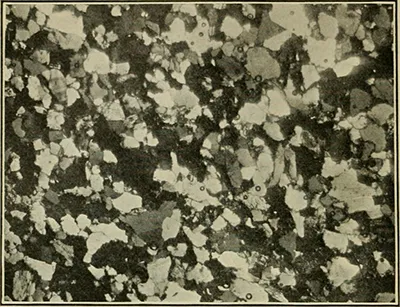
The pulse of the recent development of pulp production is fiber optimization during pulping. Good pulp is made of good chips - but it is more. Fiber optimization involves selection of the correct wood species, regulation of chip moisture and minimization of fiber degradation during chip and fiber conveyance.
The fiber properties can be better controlled through technologies in the form of laser-guided log scanners spectrometers to determine the lignin content, and real-time cooking curve adjustments.
Such detailed preparation of wood towards obtaining good quality pulp means that the fibers are not only physically sound but chemically receptive too which is of significance when it comes to cooking, bleaching and refining the process.
Market Dynamics: Why Pulp Mills Are Rushing Toward Automation
So what are some driving forces behind the interpretation of wind storms, so to speak, which are the sources behind this quick pick up of automated wood prep lines for pulp production and wood handling pulp mills?
- Rising labor costs: Automation eliminates the need to rely on people to do the same task in shifts.
- Demand for premium pulp: High strength products from specialty papers demand high pulp quality and it begins with an improved pulp wood preparation.
- Environmental mandates: Waste and air emission regulations are becoming stricter, thus efficient debarking and optimal chipping are becoming essential.
- Raw material volatility: Fiber optimization in pulping is economically now essential when wood prices are high in the food chain - every fiber counts.
As mills are trying to compete and be compliant, and therefore using innovative wood processing of pulp mills is more of a need than a gadget.
Looking Ahead: The Future of Wood Preparation Technology
So whither now? It also appears that the future of wood preparation towards the manufacture of high-quality pulp requires AI capabilities where fully autonomous operations are increasingly becoming fully learnable and adaptive. Consider a smart mill that uses scanning to automatically sort arriving logs by species and quality grade; then transfer them to the most productive wood debarking and log chipping machinery.
It may be so that cloud-based data sharing between the forestry operations and mills may imply that the pulpwood preparation is preset before the logs reach the gate. Prep line simulators will enable the mills to analyze the process before physically changing them.
Indeed, the robotization of log manipulation with the help of robotic arms, 3D imaging in order to evaluate the quality of logs on the inside, and blockchain to trace transparent wood origins are already being tested by companies. All these trends are heading towards the same direction intelligent, sustainable and high output pulp manufacturing future.
Final Thoughts: Reimagining Pulp Quality from the Roots
Now-a-days in a world where the quality of pulp is under a microscope, and sustainability, not an option, the preparation of wood to manufacture high quality pulp has never been more important. Every log, every chip and every fiber has a history--not history of trees and machines but the history of precision, innovation and relentless quest to achieve quality.
It could be in the form of superior wood debarking of the pulp mills, or efficient wood handling of pulp mills, or innovative wood processing of pulp mills, the message revolves around one thing, the path to the best pulp starts with wiser wood preparation. With the change in the log chipping systems, wood debarking, pulpwood preparation systems there is an assurance of strong, cleaner and more sustainable pulp in the future.
The big question now being, will pulp mills want to accept this change or be left behind in a world where every fiber is important?
 Our Services
 Media Pack Download
 Newsletters
 Industrial Events