Waste Management in the Pulp and Paper Industry: Technologies, Solutions and Best Practices
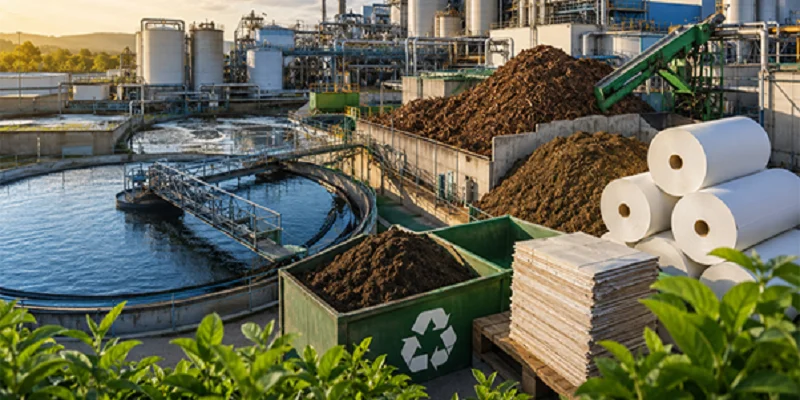
Most people picture a paper mill as one giant machine turning pulp into rolls of finished sheet. The bigger picture looks different: sludge tanks, effluent treatment plants, biomass boilers, and recovery units running in parallel, quietly handling everything the main line leaves behind. Waste management in pulp and paper industry operations has become one of the most important — and most expensive — parts of running a mill profitably and legally.
This isn't a niche compliance topic anymore. With tightening environmental regulations, rising raw material costs, and mounting pressure from customers who want greener supply chains, pulp and paper waste management now sits at the center of how mills plan capital investment, choose technology vendors, and report ESG performance to boards and buyers alike.
This article breaks down what actually generates waste in pulp and paper operations, the technologies mills are adopting to deal with it, and the practices separating the mills that are ahead of the curve from those still playing catch-up.
Why Waste Management Is a Core Business Issue, Not a Back-Office Task
A typical pulp or paper mill generates waste at almost every stage: wood yard residues, bark, rejects from pulping, black liquor solids, primary and secondary sludge from effluent treatment, boiler and lime kiln ash, and packaging or trim waste from the finishing lines. Multiply that across a mid-sized mill producing a few hundred thousand tonnes a year, and you're looking at tens of thousands of tonnes of solid waste annually — much of it wet, bulky, and expensive to transport or landfill.
That's why paper mill waste management decisions carry real financial weight. Landfill tipping fees keep climbing. Regulators in most major paper-producing regions are actively restricting how much sludge and ash can go to landfill. And increasingly, insurers and lenders are asking mills to show a credible waste strategy before extending financing. In short, how a mill handles its waste stream now directly affects its cost structure, its regulatory standing, and its ability to raise capital.
The Main Waste Streams in Pulp and Paper Operations
Before choosing technology, it helps to understand what you're actually dealing with:
- Wood and fiber waste — bark, chips, rejects, and short fiber that don't make it into the final sheet
- Chemical recovery waste — dregs, grits, and lime mud from the kraft recovery cycle
- Effluent treatment sludge — primary sludge (fiber-heavy) and secondary/biological sludge from wastewater treatment
- Ash and combustion residues — from bark boilers, power boilers, and lime kilns
- Packaging and converting waste — trim, cores, and rejected rolls from the finishing end
Each stream needs a different treatment path, which is exactly why generic industrial waste management approaches often fall short in this sector. Pulp and paper waste is wet, fibrous, and chemically complex in ways that food, textile, or metals waste simply isn't.
Core Technologies Driving Modern Waste Management Solutions for Pulp and Paper Mills
1. Sludge Dewatering and Drying Systems
Sludge is the single biggest volume challenge most mills face. Modern belt presses, screw presses, and centrifuges can push sludge dry solids content from around 20% up to 40-50%, dramatically cutting transport weight and disposal cost. Some mills are now pairing dewatering with thermal drying, turning sludge into a fuel-grade material that can be co-fired in the recovery boiler instead of trucked to landfill.
2. Anaerobic Digestion and Biogas Recovery
For high-organic-load effluent, anaerobic digestion is becoming a standard part of paper mill waste treatment design. It reduces the biological load before final treatment and produces biogas that can offset natural gas or fuel oil use in the mill's own boilers — turning a disposal cost into an energy source.
3. Waste-to-Energy and Biomass Boilers
Bark, wood rejects, and dried sludge are increasingly routed to dedicated biomass boilers rather than disposal. This is one of the fastest-growing categories of waste treatment technologies in paper manufacturing because it solves two problems at once: it reduces landfill volume and generates steam or power the mill can use directly, reducing dependence on purchased energy.
4. Chemical Recovery Optimization
In kraft mills, the recovery boiler and causticizing plant already recycle the bulk of pulping chemicals. But upgrading recovery boiler efficiency, improving lime kiln operation, and better managing dregs and grits handling can meaningfully cut the volume of chemical waste that needs external disposal — while also improving chemical recovery economics.
5. Advanced Effluent Treatment (Tertiary Treatment)
Many mills are moving beyond basic primary and secondary treatment toward tertiary systems — membrane bioreactors, advanced oxidation, and color removal units — to meet stricter discharge standards and, in water-scarce regions, to enable partial water reuse within the mill itself.
Pulp and Paper Waste Recycling: Closing the Loop
Pulp and paper waste recycling isn't limited to recovering wastepaper as raw material, though that remains a massive part of the industry's circular economy. Inside the mill, recycling now extends much further:
- Fiber recovered from primary sludge can sometimes be reintroduced into lower-grade paper products
- Boiler ash and lime mud residues are increasingly tested for use in cement production, soil amendment, or construction materials
- Bark and wood residues are chipped and sold or used on-site as biomass fuel
- Reject fiber from screening operations is often reprocessed rather than discarded
Mills that treat these residues as potential co-products — rather than pure waste — are finding new, sometimes unexpected, revenue lines. A few forward-thinking operations have even built dedicated by-product sales teams whose entire job is finding buyers for material that used to go straight to landfill.
Sustainable Waste Management Practices for Paper Mills: What Leading Operations Actually Do Differently
Talk to environmental managers at high-performing mills and a few common threads show up again and again:
They measure everything. You can't manage what you don't track. Leading mills monitor waste generation by stream, by shift, and by product grade — not just an annual total — so they can spot inefficiencies early.
They design for waste reduction upstream, not just disposal downstream. Reducing reject rates in pulping, optimizing chemical dosing, and improving fiber yield all shrink the waste stream before it ever reaches a treatment plant.
They integrate energy and waste planning. The mills getting the best returns don't treat their waste-to-energy boiler and their effluent plant as separate projects — they design them together, so residual streams from one process become fuel or input for another.
They build relationships with off-takers early. Whether it's a cement plant that wants lime residue or an agricultural operation interested in treated sludge as soil conditioner, having buyers lined up before the waste is generated turns a cost center into a supply agreement.
They stay ahead of regulation instead of reacting to it. Environmental standards for pulp and paper effluent and solid waste tend to tighten over time, rarely loosen. Mills that invest in capacity headroom now avoid expensive retrofits later.
Choosing the Right Waste Management Technologies for Your Mill
There's no single best answer here — the right mix of waste management technologies depends heavily on mill type (kraft, mechanical, recycled fiber), local regulation, water availability, and energy costs. That said, a few questions tend to guide the decision well:
- What's the actual composition and volume of each waste stream, measured, not estimated?
- Can any waste stream be converted into fuel, raw material, or a saleable by-product?
- What are current and anticipated future disposal costs and regulatory limits in your region?
- Does the mill have space and utility capacity to add dewatering, drying, or combustion equipment?
- What's the realistic payback period, factoring in energy savings and avoided disposal costs, not just capital cost?
Mills that answer these questions with real data — rather than assumptions carried over from decades-old plant design — consistently make better technology decisions.
Frequently Asked Questions
What is the biggest waste stream in a typical paper mill?
Effluent treatment sludge is usually the largest volume waste stream by weight, followed by wood and bark residues and chemical recovery waste such as lime mud and dregs.
Can pulp and paper mill sludge be reused?
Yes. Depending on composition, sludge can be dewatered and used as boiler fuel, processed into soil amendments, or in some cases used as an input for cement and construction materials after appropriate treatment.
What technologies reduce landfill dependence the most?
Sludge dewatering combined with biomass or waste-to-energy boilers typically delivers the biggest reduction, since it addresses the highest-volume waste stream directly.
Is investing in advanced waste treatment actually cost-effective?
In most cases, yes — when energy recovery, avoided landfill fees, and reduced regulatory risk are factored in alongside potential by-product revenue, payback periods are often shorter than mills initially expect.
The Bottom Line
Sustainable waste management practices for paper mills aren't a compliance checkbox anymore — they're a genuine competitive advantage. Mills that invest in the right combination of dewatering, energy recovery, chemical recovery optimization, and by-product development are cutting disposal costs, generating new revenue streams, and building the kind of environmental credibility that customers, regulators, and lenders now expect as standard.
The mills still treating waste management as an afterthought are the ones that will feel the squeeze first — through rising disposal costs, tightening regulation, and lost business from buyers demanding cleaner supply chains. The technology and know-how to do better already exist. The mills moving now are the ones that will be setting the industry standard five years from now.
 Our Services
 Media Pack Download
 Newsletters
 Industrial Events