How Paper Mills Manage Waste: Treatment, Recovery and Sustainable Disposal
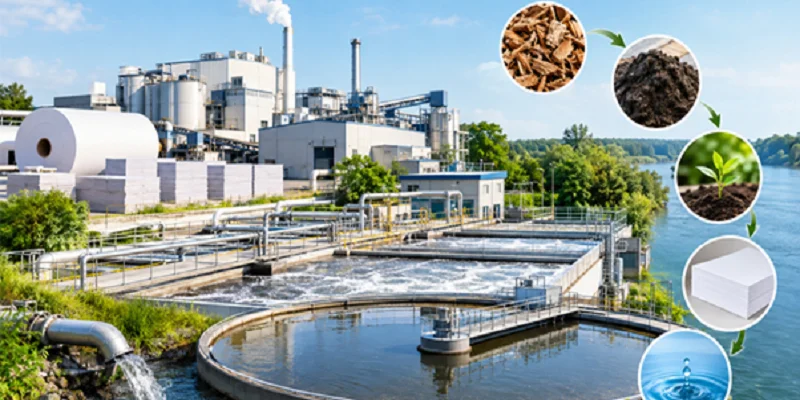
Most people never think about what happens after a sheet of paper leaves the mill floor — or more importantly, what happens to everything that doesn't make it onto that sheet. Making paper is a thirsty, messy business. Wood fibers get cooked, bleached, washed, pressed, and dried before they ever become the notebook on your desk or the box on your porch. Every one of those steps generates waste, and what a mill does with that waste says a lot about how responsibly it's run.
This article breaks down exactly how paper mill waste treatment works today, from the effluent flowing out of pulping units to the sludge piling up in clarifiers, and why paper mill waste management has become one of the most closely watched areas of industrial environmental compliance.
Why Paper Mill Waste Management Matters So Much
The pulp and paper industry is one of the largest industrial consumers of freshwater in the world, and with that water use comes a heavy load of byproducts — organic matter, chemicals, fibers, and solids that can't simply be dumped back into a river or landfill without consequence.
Untreated paper mill effluent is loaded with biochemical oxygen demand (BOD), chemical oxygen demand (COD), suspended solids, and in some cases lignin-derived compounds that discolor water and choke aquatic ecosystems. Add in the sludge generated at nearly every stage of production, and you can see why regulators worldwide have set strict discharge limits for this sector.
Good waste management isn't just about avoiding fines. It protects local water tables, reduces a mill's carbon footprint, and increasingly, it's a factor customers and investors actually care about when choosing paper suppliers. Mills that get this right also tend to run more efficiently overall, since a lot of waste reduction overlaps with better resource use.
Where the Waste Actually Comes From
Before getting into treatment methods, it helps to understand the waste streams a mill deals with:
- Pulping waste – black liquor, bark, wood residues, and fiber losses from the cooking process
- Bleaching waste – chlorinated or oxygen-based bleaching effluents containing organic chlorine compounds
- Papermaking waste – fiber fines, coating rejects, and broken sheet trim
- Wastewater/effluent – process water carrying dissolved and suspended contaminants
- Sludge – primary and secondary solids removed during effluent treatment
- Ash and lime waste – from the recovery boiler and causticizing process
Each of these needs a slightly different approach, which is why modern mills run a layered system rather than a single treatment step.
Paper Mill Effluent Treatment: The Core of the Process
Effluent treatment is the backbone of pulp and paper waste treatment. Most facilities run their wastewater through three stages before it's considered safe for discharge or reuse.
1. Primary Treatment
This is the mechanical stage. Screens, grit chambers, and clarifiers remove large solids, fibers, and settleable particles. Think of it as the "first pass" filter — it doesn't touch dissolved pollutants, but it takes a big chunk of the solid load off the water before biological treatment even starts.
2. Secondary (Biological) Treatment
This is where most of the organic pollution gets tackled. Two methods dominate:
- Activated Sludge Process (ASP) – microorganisms are mixed with effluent in aeration tanks, where they consume organic matter and reduce BOD and COD significantly.
- Aerated Lagoons – a lower-cost alternative where effluent sits in large ponds with mechanical aeration, allowing natural microbial breakdown over a longer retention time.
Some mills also use anaerobic digestion for high-strength effluents like black liquor condensate, which has the added benefit of producing biogas that can be burned for energy — turning a waste problem into a small energy win.
3. Tertiary Treatment
For mills discharging into sensitive water bodies or looking to reuse water internally, tertiary treatment adds another layer: sand filtration, activated carbon adsorption, membrane filtration (ultrafiltration or reverse osmosis), or advanced oxidation to strip out remaining color, chlorinated organics, and trace contaminants.
This staged approach is essentially the answer to "how is paper mill waste treated" in one sentence: mechanical removal, then biological breakdown, then polishing — each stage cutting the pollutant load further before water is released or recycled.
Paper Mill Sludge Treatment: Dealing With the Solids
Every treatment stage generates sludge, and this is often the most underestimated part of the process. Primary sludge (mostly fiber and fillers) and secondary sludge (biological solids from the treatment plant) both need to be managed carefully.
Common paper mill sludge treatment methods include:
- Dewatering – belt presses, centrifuges, or screw presses reduce water content, cutting down volume and transport cost dramatically.
- Composting – organic sludge, when free of heavy contaminants, can be composted and used as soil conditioner or agricultural amendment.
- Incineration – dewatered sludge can be burned in a boiler to recover energy, especially useful when the sludge has decent calorific value.
- Land application – in some regions, treated sludge is applied to agricultural or forest land as a nutrient source, provided it meets safety standards.
- Landfilling – still used as a last resort where recovery options aren't feasible, though it's increasingly discouraged due to space and environmental concerns.
The trend across the industry is clear: mills are moving away from simply landfilling sludge and toward recovery-based options that turn a disposal cost into either usable material or energy.
Paper Mill Waste Disposal: What Happens to What's Left
Even with strong recovery systems, some waste has nowhere to go but disposal. The key is doing this in the least harmful, most regulated way possible.
- Secure landfilling for non-recoverable solids, lined and monitored to prevent leachate contamination
- Co-processing in cement kilns, where certain paper waste fractions serve as alternative fuel
- Controlled incineration with emission scrubbing for waste that can't be recycled or composted
- Regulated discharge of fully treated effluent into water bodies, within permitted pollutant limits
The goal across all of these is minimizing the volume that actually needs disposal, since every ton diverted from a landfill is a ton that isn't costing the mill money or environmental goodwill.
Recovery: Turning Waste Into Value
This is arguably the most interesting part of modern paper mill waste management — the shift from "get rid of it" to "get value from it."
- Chemical recovery – Kraft mills recover cooking chemicals from black liquor through evaporation and combustion in a recovery boiler, regenerating chemicals for reuse and generating steam and power in the process. This single system is one of the best examples of industrial circularity anywhere.
- Fiber recovery – Save-alls and fiber recovery units capture usable fiber from wastewater before it becomes sludge, reducing raw material costs.
- Energy recovery – Bark, wood waste, and dewatered sludge are burned in biomass boilers, offsetting fossil fuel use.
- Water reuse – Treated effluent is increasingly reused within the mill for washing, cooling, or dilution, cutting freshwater intake substantially.
- Byproduct valorization – Lignin, once considered pure waste, is now being extracted and sold as a raw material for adhesives, bio-based chemicals, and even carbon fiber precursors.
Industrial Waste Treatment Trends Shaping the Future
Paper mills don't operate in isolation from broader industrial waste treatment trends. A few shifts are worth watching:
- Membrane bioreactors (MBR) combining biological treatment with membrane filtration for higher-quality effluent in a smaller footprint
- Zero Liquid Discharge (ZLD) systems, which aim to recover nearly all process water and leave only a small solid residue
- AI-based process monitoring, using sensors and predictive analytics to optimize chemical dosing and catch treatment inefficiencies early
- Circular economy partnerships, where mill byproducts like sludge ash or lignin are sold to other industries instead of being disposed of
These aren't distant concepts — many large mills are already piloting or fully running these systems, and it's becoming a competitive differentiator in the industry.
Effective Waste Treatment Solutions for Paper Manufacturing: A Quick Checklist
For mills looking to improve their approach, the most effective waste treatment solutions for paper manufacturing typically combine:
- Strong primary screening to reduce load on downstream systems
- Biological treatment tuned to the mill's specific effluent characteristics
- Sludge dewatering paired with a recovery pathway (composting, energy, or land application)
- Closed-loop chemical recovery for Kraft and sulfite processes
- Water reuse systems to cut freshwater dependency
- Regular effluent monitoring against regulatory benchmarks
Mills that treat these as an integrated system — rather than separate checkboxes — tend to see the biggest gains in both compliance and cost savings.
Frequently Asked Questions
How is paper mill waste treated?
It's treated in stages: mechanical screening removes solids, biological treatment (activated sludge or aerated lagoons) breaks down organic pollutants, and tertiary treatment like filtration or membrane systems polishes the water before discharge or reuse.
What is the main method of paper mill sludge treatment?
Dewatering is the most common first step, followed by either composting, incineration for energy recovery, land application, or landfilling depending on the sludge composition and local regulations.
Is paper mill effluent safe to discharge after treatment?
Yes, when treated through the full primary-secondary-tertiary process and monitored against BOD, COD, and suspended solids limits, treated effluent typically meets regulatory discharge standards. Many mills now reuse a large share of it internally instead.
What happens to chemicals used in pulping?
In Kraft mills, cooking chemicals are recovered from black liquor through evaporation and combustion in a recovery boiler, then regenerated and reused, making the process largely closed-loop.
Why is paper mill waste disposal becoming more regulated?
ecause untreated effluent and sludge can significantly harm water quality and soil health, governments have tightened discharge and disposal standards, pushing mills toward recovery-based solutions over simple dumping or landfilling.
Final Thoughts
Paper mill waste treatment has come a long way from the days of untreated discharge and open dumping. Today's mills run layered systems — mechanical, biological, and chemical — designed not just to meet compliance standards but to recover as much value as possible from what used to be considered pure waste. Sludge becomes compost or fuel, chemicals get regenerated and reused, and water gets cleaned well enough to go right back into the process.
The direction is clear: the future of pulp and paper waste treatment isn't about disposal at all. It's about designing systems where less waste is created in the first place, and what remains gets turned into something useful. Mills that invest in this shift aren't just avoiding environmental risk — they're building a more resilient, cost-effective operation for the long run.
 Our Services
 Media Pack Download
 Newsletters
 Industrial Events