Paper Mill Sludge Treatment and Dewatering: Technologies, Equipment and Management Solutions
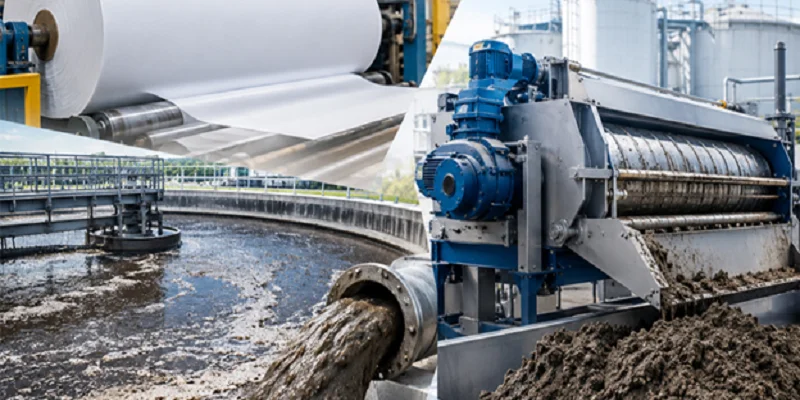
Every ton of pulp or paper produced leaves behind a residue that mills can't just wish away - sludge. It's thick, it's heavy with water, it's expensive to move, and if it's mismanaged, it becomes a compliance pain and a cost center that chucks into margins quietly, month after month. For plant managers and environmental engineers, the real question isn't whether to treat this waste stream - it's how to do it efficiently, affordably, and in a way that doesn't create new problems downstream.
This guide breaks down paper mill sludge treatment and dewatering from the ground up: where the sludge comes from, which technologies actually work, what equipment delivers the best return, and how mills are managing disposal without drowning in regulatory or cost pressure.
What Is Paper Mill Sludge, and Why Does It Need Treatment?
Paper mill sludge is the solid byproduct generated during pulping, deinking, and wastewater treatment processes. It's typically a mix of short cellulose fibers, fillers like clay or calcium carbonate, ink particles (in recycled mills), and biological solids from effluent treatment plants.
Untreated, this sludge is over 95% water by weight. That single fact drives almost every decision in pulp and paper sludge management - because moving, storing, or disposing of something that's mostly water is enormously expensive. Treatment exists to strip out that water, stabilize the solids, and turn a liability into something manageable - or even valuable, in the case of fiber recovery or energy generation.
The Core Stages of Paper Mill Sludge Treatment
Paper mill sludge treatment generally follows a sequence, though the exact configuration varies by mill type (kraft, recycled/deinking, mechanical pulp, or tissue).
- Sludge Collection and Thickening — Raw sludge from clarifiers, flotation units, or biological treatment is first thickened using gravity thickeners, dissolved air flotation (DAF), or gravity belt thickeners. This step typically raises solids content from 1–3% to 4–8%.
- Chemical Conditioning — Polymers or coagulants are dosed into the sludge to bind fine particles together into larger flocs. This step is critical — poorly conditioned sludge won't dewater well no matter how good the equipment is downstream.
- Mechanical Dewatering — This is where the bulk of water removal happens, using presses or centrifuges (covered in detail below).
- Final Handling — Depending on end use, dewatered sludge may go to landfill, incineration, land application, composting, or beneficial reuse (cement kilns, brick manufacturing, energy recovery).
Paper Mill Sludge Dewatering: The Technologies That Matter
Paper mill sludge dewatering is the single highest-impact step in the entire management chain, because every percentage point of moisture removed translates directly into lower transport costs, lower disposal fees, and often lower disposal tipping charges (many landfills charge by weight).
Screw Press Dewatering
Screw presses are the dominant technology in modern mills because they run continuously, use relatively little energy, and handle fibrous paper sludge exceptionally well - the long cellulose fibers actually help form a stable filter cake. They typically achieve 30–45% dry solids, depending on sludge composition and conditioning quality.
Belt Filter Presses
Belt presses use a combination of gravity drainage and mechanical pressure between two moving belts. They're a proven, cost-effective choice for medium-to-large mills, generally producing cake in the 25–35% dry solids range.
Centrifuges
Decanter centrifuges spin sludge at high speed to separate solids from liquid. They're compact, fully enclosed (good for odor control), and handle variable sludge characteristics well, though they consume more energy than screw presses.
Filter Presses
For mills needing the driest possible cake - often above 45–50% solids - plate-and-frame or membrane filter presses are used. They're batch-operated and slower, but unmatched for final moisture reduction, which matters when disposal costs are dominated by hauling weight.
Quick answer: For most paper mills, screw presses offer the best balance of continuous operation, low energy use, and solid dewatering performance - which is why they've become the default choice in modern upgrades.
Choosing Sludge Dewatering Equipment: What Actually Matters
When evaluating sludge dewatering equipment, mills should weigh five factors rather than chasing the lowest upfront price:
- Throughput capacity relative to actual daily sludge generation, with headroom for production increases
- Achievable dry solids percentage, since this directly determines disposal cost savings
- Energy consumption per ton of sludge processed
- Maintenance complexity and wear-part costs — screw presses generally win here over belt presses with frequent belt replacement
- Footprint and enclosure, especially for mills with odor or space constraintsA common mistake is selecting equipment based on capital cost alone. A press that's $50,000 cheaper but delivers 10% less dry solids can cost far more over five years in trucking and landfill fees.
Pulp and Paper Sludge Management: Building a System, Not Just Buying a Machine
Pulp and paper sludge management works best as an integrated system rather than a single piece of equipment bolted onto an existing process. Mills that get the best results typically:
- Match conditioning chemistry precisely to their sludge type (deinking sludge behaves very differently from primary clarifier sludge)
- Monitor dry solids output continuously and adjust polymer dosing in real time rather than on a fixed schedule
- Pair dewatering with downstream reuse options early in the design process, rather than treating disposal as an afterthought
- Track cost-per-ton-disposed as a core KPI, not just equipment uptime
This systems-level thinking is what separates mills that steadily reduce sludge-related costs year over year from those that keep fighting the same problem on repeat.
Paper Mill Sludge Disposal: Where the Solids Actually Go
Once dewatered, paper mill sludge disposal routes fall into a few main categories:
- Landfilling — still common, but increasingly expensive and restricted in many regions
- Incineration/energy recovery — dewatered sludge with sufficient calorific value can be burned for process heat, particularly effective when dry solids exceed 40%
- Land application — sludge with beneficial nutrient or fiber content can be applied to agricultural or forestry land, subject to regulatory approval
- Beneficial reuse — increasingly popular routes include use as raw material in cement kilns, lightweight aggregate, or brick manufacturing
- Composting — viable for sludge with organic content suitable for blending into soil amendments
Quick answer: The lowest-cost disposal route almost always depends on achieving the highest practical dry solids percentage first - better dewatering opens up cheaper, and sometimes revenue-generating, disposal options.
Industrial Sludge Treatment: Lessons From Beyond the Paper Sector
Industrial sludge treatment practices from municipal wastewater and other manufacturing sectors have influenced paper mill approaches significantly. Technologies like thermal hydrolysis, anaerobic digestion for volume reduction, and advanced polymer chemistries - originally developed for municipal biosolids - are increasingly being adapted for pulp and paper applications, particularly at larger integrated mills looking to cut disposal volumes further.
Sludge Management Solutions for Paper Mills: A Practical Checklist
For mills evaluating or upgrading their approach, effective sludge management solutions for paper mills typically include:
- A thickening stage sized correctly for actual sludge volume
- Properly matched chemical conditioning
- Mechanical dewatering equipment suited to sludge type and throughput
- A clear, cost-optimized disposal or reuse pathway
- Ongoing monitoring and process adjustment rather than "set and forget" operation
How to Reduce and Manage Sludge in Paper Mills: Practical Steps
Mills asking how to reduce and manage sludge in paper mills should focus on prevention as much as treatment:
- Improve fiber recovery upstream — better screening and save-all systems reduce fiber loss into the sludge stream in the first place
- Optimize chemical dosing across the process to reduce excess coagulant/filler carryover into sludge
- Upgrade dewatering equipment where dry solids output has plateaued below 30%
- Explore beneficial reuse partnerships to convert a disposal cost into a revenue stream
- Benchmark sludge generation per ton of product against industry norms to identify where volume can be cut at the source
Frequently Asked Questions
What is the typical dry solids percentage after paper mill sludge dewatering?
Most mechanical dewatering technologies achieve 25–45% dry solids, with screw presses and belt presses in the 30–40% range and filter presses reaching 45–50%+ for maximum moisture removal.
Which equipment is best for paper mill sludge dewatering?
Screw presses are generally preferred for continuous operation, lower energy use, and strong performance with fibrous sludge, though filter presses are used when maximum dryness is the priority.
What is the biggest cost driver in paper mill sludge management?
Transport and disposal costs, which are directly tied to the weight (and therefore moisture content) of the sludge - making dewatering efficiency the single biggest lever for cost control.
Can paper mill sludge be reused instead of disposed of?
Yes. Common reuse routes include energy recovery through incineration, use in cement kiln raw material, brick manufacturing, and land application, depending on sludge composition and local regulations.
 Our Services
 Media Pack Download
 Newsletters
 Industrial Events