Paper Embossing and Laminating Machines: Technologies for Paper Finishing
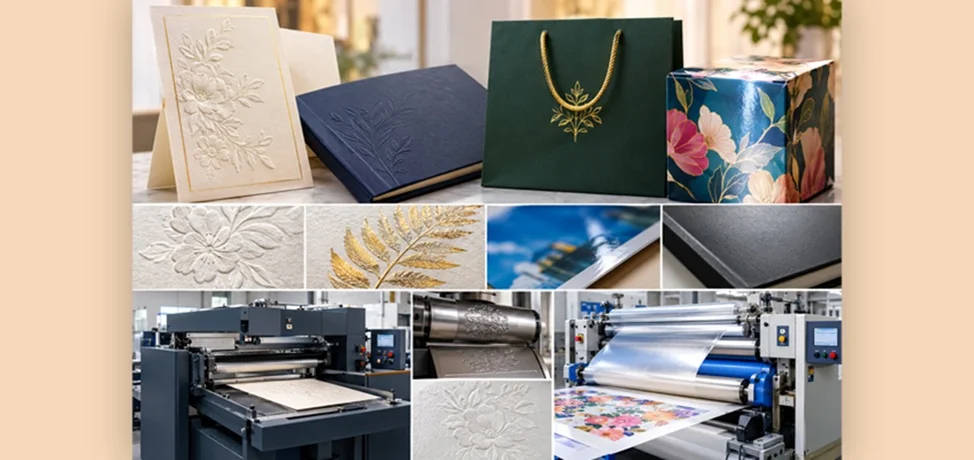
Pick up a premium wedding card, a luxury shopping bag, or a hardcover book jacket. Before you read a single word, your fingers have already formed an opinion. The raised logo, the soft-touch cover, the glossy shine that doesn't smudge: none of that is printing. It's finishing.
And finishing is where paper stops being "just paper" and starts feeling valuable. Two processes do most of the heavy lifting: embossing and laminating. This guide explains what they are, how the machines work, where they're used, and how to choose the right equipment without wasting money.
Quick answer: A paper embossing machine presses a design into paper using a metal die and counter die, creating a raised or recessed pattern. A paper laminating machine bonds a thin plastic film to the paper's surface using heat, pressure, and adhesive, adding protection, gloss, or a matte finish. Together they make up the core of paper finishing machinery.
What Is a Paper Embossing Machine?
An embossing machine creates a three-dimensional impression on paper or board. Two matching tools, a male die and a female counter die, squeeze the sheet between them under pressure (and often heat). The fibers stretch and hold the new shape.
Common embossing styles:
- Blind embossing: raised design with no ink or foil. Subtle and elegant.
- Registered embossing: the raised area lines up exactly with printed artwork.
- Debossing: the opposite effect, where the design sinks into the paper.
- Combination (foil + emboss): metallic foil and relief in one pass.
- Texture embossing: all-over patterns like linen, leather grain, or canvas.
Good paper embossing equipment controls three things: pressure, temperature, and alignment. Get any of them wrong and you'll see flattened details, cracked fibers, or a design that drifts off-register.
What Is a Paper Laminating Machine?
A paper laminating machine applies a thin film, usually polypropylene (BOPP), PET, or nylon, to printed paper. The film is glued on using heat and pressure, and the result is a sheet that resists scuffs, moisture, and fingerprints.
Typical finishes:
- Gloss: bright, vivid colors; great for brochures and packaging
- Matte: smooth, modern, glare-free
- Soft-touch: velvety feel, popular on premium cards and book covers
- Anti-scratch and metallized films: for high-wear or decorative uses
Modern laminating equipment falls into a few families:
1. Thermal laminators: pre-coated film activated by heat. Clean, fast, and widely used.
2. Wet (adhesive) laminators: adhesive is applied during the process, then dried. Strong bond, flexible film options.
3. Water-based and solventless systems: lower emissions, favored where environmental rules are strict.
How Do Embossing and Laminating Processes for Paper Products Work?
Whether you run them as separate steps or in one production line, the embossing and laminating processes for paper products follow a similar logic.
Laminating, step by step:
1. Printed sheets or rolls are fed into the machine.
2. Film unwinds from a roll and is aligned with the paper.
3. Heated rollers activate the adhesive and press film to paper.
4. The laminated stock cools and is trimmed or rewound.
Embossing, step by step:
1. A die is made (often from magnesium, brass, or steel) and mounted on the machine.
2. The counter die is formed or applied to match.
3. The sheet passes between the dies under controlled pressure and heat.
4. The embossed sheet is stacked or sent to die-cutting and folding.
A pro tip on order: Laminate first if you want texture on top of a protected surface. Emboss first if you want to avoid film cracking over deep relief. Many converters emboss after laminating with a soft-touch film because the relief reads beautifully on it, but test your film's stretch limits before committing to a run.
Types of Industrial Paper Embossing and Laminating Equipment
Industrial paper embossing and laminating equipment ranges from tabletop units to full inline production lines.
| Equipment type | Best for | Typical output |
| Flatbed embossing press | Cards, invitations, folders, short runs | Low to medium |
| Rotary embossing machine | Wallpaper, gift wrap, packaging rolls | High, continuous |
| Sheet-fed laminator | Brochures, book covers, cartons | Medium |
| Roll-to-roll laminator | Labels, large-format prints, packaging | High |
| Combined emboss + laminate line | Premium packaging, stationery at scale | High, consistent |
If you run mostly short, high-value jobs (think invitations or luxury boxes), a flatbed press and a sheet-fed laminator give you flexibility. If you run long web-based jobs, rotary and roll-fed systems win on speed and cost per meter.
Paper Embossing and Laminating Machine Applications
The paper embossing and laminating machine applications list is longer than most people expect:
- Packaging: cosmetic boxes, food cartons, shopping bags, gift boxes
- Publishing: book covers, magazine covers, catalogs, dust jackets
- Stationery: business cards, wedding invitations, certificates, notebooks
- Marketing materials: brochures, menus, product folders, ID cards
- Decorative paper: wallpaper, gift wrap, textured specialty stocks
- Labels: wine and spirits labels, cosmetics labels, premium product tags
In packaging especially, finishing isn't decoration. It's strategy. A tactile box lifts perceived value before the customer even opens it.
Embossing vs. Laminating: What's the Difference?
| Feature | Embossing | Laminating |
| Main purpose | Texture and visual depth | Protection and surface finish |
| Method | Dies, pressure, heat | Film, adhesive, heat, pressure |
| Adds material? | No | Yes (a thin film) |
| Look and feel | Raised or recessed pattern | Gloss, matte, or soft-touch |
| Durability boost | Minor | Significant |
They aren't rivals. Most high-end print jobs use both.
How to Choose the Right Paper Finishing Machinery
Before you request quotes, answer these questions honestly:
- What's your typical job size? Short runs favor flexible, quick-setup machines. Long runs favor speed and automation.
- What substrates do you handle? Paper weight, coated vs. uncoated stock, and board thickness all affect settings.
- What sheet or roll width do you need? Buy for your actual work, plus a modest buffer.
- How skilled is your team? Automation features like auto-register and digital temperature control reduce errors.
- What does service look like? Spare parts, local technicians, and training matter more than a small price gap.
- Are your film and adhesive choices compliant? Check food-contact and environmental requirements if you pack consumer goods.
Common Problems (and Quick Fixes)
- Bubbles or wrinkles after laminating: usually uneven tension or low temperature. Recalibrate roller pressure and check film storage.
- Film peeling at edges: ink or coating may be blocking adhesion. Run a corona treatment or switch film type.
- Cracking on embossed areas: the stock is too dry or too thick for the die depth. Adjust pressure, or choose a more flexible film.
- Flat or weak embossing: worn die, low pressure, or too little dwell time.
- Register drift: check feeding accuracy and die mounting first.
- Trends Shaping Paper Embossing and Laminating Equipment
- Digital and hybrid finishing: digital embellishment units add raised spot effects without traditional dies, ideal for personalized, short runs.
- Sustainable films: recyclable and biodegradable laminating films are growing as brands face pressure to cut plastic.
- Automation: inline sensors, auto-setup, and smart temperature control reduce waste and downtime.
- Soft-touch everything: tactile finishes keep rising in packaging and publishing.
Frequently Asked Questions
What is the difference between a paper embossing machine and a paper laminating machine?
An embossing machine shapes the paper itself into a raised or recessed design. A laminating machine adds a protective film layer on top. One changes texture; the other changes surface and durability.
Can you emboss laminated paper?
Yes. Soft-touch and standard BOPP films can be embossed, provided the film is flexible enough and the die depth isn't extreme. Always run a test sheet first.
Which is better for packaging: embossing or laminating?
Neither alone. Laminating protects and sets the finish, while embossing adds the premium tactile signal. Most luxury packaging uses both.
How much does paper finishing machinery cost?
Prices vary widely by size, automation, and speed. Tabletop units cost a fraction of industrial inline lines. Request quotes with your actual job specs for realistic numbers.
Is lamination bad for recycling?
Plastic-film lamination can complicate paper recycling. Water-based coatings and recyclable or compostable films are increasingly used to solve this.
What materials can be embossed?
Most uncoated and coated papers, cardstock, and thin boards. Very thin or brittle stock may tear, so match die depth to paper weight.
Final Thoughts
A paper embossing machine and a paper laminating machine do different jobs, but they chase the same goal: making printed paper feel worth keeping. Choose equipment around your real job mix, test your substrates, and invest in service and training as much as the machine itself.
Get the finishing right and your paper products don't just look better. They get noticed, handled, and remembered.
Looking for industrial paper embossing and laminating equipment? Share your sheet size, daily volume, and substrate type with your supplier to get a precise recommendation, and ask for sample runs before you buy.
 Our Services
 Media Pack Download
 Newsletters
 Industrial Events