Nanocellulose: The Next Frontier in Pulp and Paper Technology
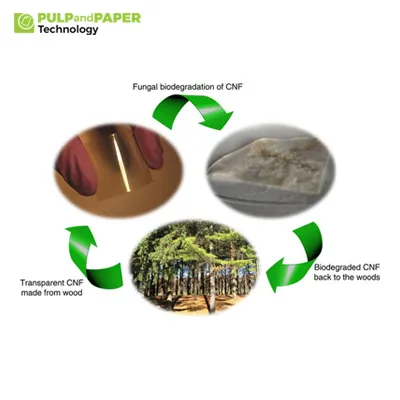
In the past few years, the pulp and paper industry has changed in many areas where nanotechnology is on the rise in the pulp and paper industries. However, one of these advancements creates tremendous impact, which is nanocellulose that is widely regarded in making new paper making material. Being a sustainable and high-performance material, this polymer has potential in a wide range of industries such as electronics, packaging, and clothing. In this article, we will also discuss about how nanocellulose paper making is an active force for change and opportunity that is bringing out different prospects in the industry.
The Rise of Nanocellulose in Paper Making
Nanocellulose is one of the new materials which are derived from plant fiber and has the following properties, especially high in mechanical strength, biodegradability, and low in optical density. Its use in nanocellulose paper making shows a new direction in producing environment friendly and high quality papers. Normal paper has its weaknesses and strength but when nanocellulose is used as additives in paper these papers are much stronger and are not easily tore. This creates prospects for nanocelluloses in the paper industry with the aim to manufacture papers which are denser, thinner, and more purposeful.
Electroluminescent and Photoluminescent Nanocellulose Papers
The future prospect of nanocellulose is presented stimulating example of the electroluminescent nanocellulose paper. This new material produces light when it is exposed to an electric current making it suitable in the flexible electronic device industry especially in flexible display devices, smart packaging as well as light emitting posters. Moreover, there are other peculiar characteristics of nanocellulose paper with photoluminescent feature in that it can emit light under distinct lighting conditions without light illumination. They show that nanocellulose paper devices can revolutionize the sectors of advertisement, packaging and wearables and open the future market of paper technology.
Nanocellulose in Paper and Textile Coating
Other than electronics, another region that is expected to experience increased use in the future is in paper and textile coating. Based on nanocellulose coatings render high barrier, making it difficult for water, oil as well as gases to penetrate through the coatings. It will be particularly useful to the packaging industry because it improves on the existing property of paper, which as a material possesses good protection while at the same time is biodegradable. Nanocellulose coatings in textiles enhance durability besides offering anti- mechanical stress known for the use in sustainable fashion and packaging.
Automation and Precision in Nanocellulose Paper Production
The incorporation of automation in nanocellulose paper production is enhancing the accuracy of production in addition to the rates of production.
New techniques are being designed in order to bring nanocellulose paper device fabrication processes such as coating and assembly in to a manufacturing mass scale without compromising the quality of the device produced. Automated processes decrease the occurrence of errors in nanocellulose paper production while shortening the production time, thus allowing companies to satisfy increasing consumer needs for unique and eco-friendly paper products.
Frontier Technologies for Plastic Pollution
Nanocellulose can be used in instance of fighting against the exploitation of plastic in our daily lives since it is an effective substitution to the plastics used in our societies. Its application in areas where it can replace plastic include packaging, coatings and containers makes it an essential element in frontier technologies combating plastic pollution. Integrating nanocellulose paper into the market products, industries will be able to cut the unnecessary use of non-degradable materials hence promoting sustainability.
Stretching and Bending Capabilities of Nanocellulose Paper
Another characteristic of the nanocellulose paper is flexibility which is one if the distinguishing qualities of nanocellulose paper. The mechanical strength and flexibility that the paper itself must possess to maintain its shape under stretching and bending is a key requirement for the useof nano cellulose paper in applications such as wearable technologies, flexible electronics and foldable devices. Scientists are continually optimizing the mechanical characteristics of nanocellulose paper with an aim of making it flexible enough to undergo stretching and bending repeatedly without compromising on its overall performance, thus making nanocellulose paper the ideal material for use in next generation gadgets.

Nanocellulose Production Technology
This means that the need to develop the technology on nanocellulose production cannot be over emphasized due to the rising demand on nanocellulose. New being nano-cellulose manufacturing techniques also try to counteract price hiccups, scaling challenges and most importantly ability to supply renewable feed stock for nanocellulose production. Much effort has been made to create nanocellulose and fine-tune extraction methods and material properties to allow for the broader uptake of this technology in the pulp and paper industry.
Conclusion
Nanotechnology is relatively young application in the fields of pulp and paper industries and its main player is nanocellulose. As seen from the electroluminescent nanocellulose paper to the automation in nanocellulose paper production, the future opportunities are huge and amazing. While the world gradually moves to environmentally friendly materials, nanocellulose is rising to become the new trend of industries transitioning to sustainability.
The high versatility of nanocellulose in combination with the progressive improvement of technologies to extract nanocellulose makes this material the main candidate to become an indispensable component of such industries as packaging and textile industries, thin-film transistors and photovoltaic cells, and many others. Therefore, the use of nanocellulose means that the pulp and paper industry can take the role as an innovative pioneer in the drive towards sustainable development.
 Our Services
 Media Pack Download
 Newsletters
 Industrial Events