Kraft Pulping Process Explained: Equipment, Chemicals and Industrial Applications
If you've ever wondered how a pile of wood chips turns into the paper you're reading right now (or the cardboard box your last online order arrived in), the answer almost always traces back to one chemical process: Kraft pulping. It's the backbone of the global pulp and paper industry, responsible for producing roughly 90% of the world's chemical pulp. Yet despite its massive industrial footprint, most people outside the paper industry have never heard of it.
This article breaks down exactly what Kraft pulping is, how the Kraft process works step by step, the equipment and chemicals involved, and the best practices mills use to keep production efficient and profitable.
What Is Kraft Pulping?
Kraft pulping is a chemical process used to convert wood chips into pulp by dissolving lignin — the natural "glue" that binds wood fibers together — while leaving the cellulose fibers largely intact. The word "Kraft" comes from the German and Swedish word for "strength," a fitting name since paper made through this process is notably stronger than pulp produced through mechanical or other chemical methods.
Developed in the late 19th century by German chemist Carl F. Dahl, the Kraft process quickly became the dominant pulping method worldwide because of its ability to process almost any wood species, its efficient chemical recovery system, and the superior strength of the resulting paper products.
The Kraft Process: Step-by-Step Overview
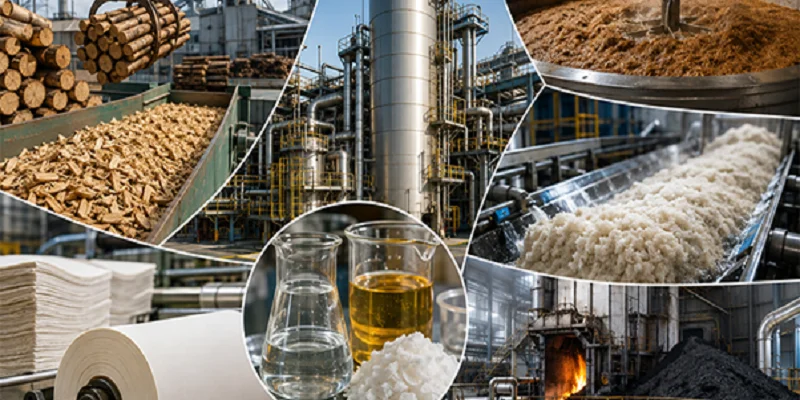
The Kraft pulp production process can be broken into a few core stages: wood preparation, cooking (digestion), washing, bleaching (optional), and chemical recovery. Let's walk through each one.
1. Wood Preparation
Logs arrive at the mill and are debarked, then chipped into small, uniform pieces — typically about 15–25 mm long. Uniform chip size matters a great deal here, because uneven chips lead to inconsistent cooking and lower pulp quality later in the process.
2. Cooking in the Digester
This is where the real chemistry happens. Wood chips are loaded into a pressurized vessel called a pulp digester, along with a chemical cooking liquor known as white liquor. Under high temperature (roughly 150–180°C) and pressure, the white liquor breaks down and dissolves the lignin binding the wood fibers together, freeing the cellulose fibers needed to make pulp.
3. Washing and Screening
Once cooking is complete, the pulp is separated from the spent cooking liquor (now called black liquor) and washed thoroughly to remove residual chemicals and dissolved organic material. The pulp is then screened to remove any uncooked chips, knots, or debris.
4. Bleaching (Optional)
If the end product needs to be bright white — think office paper or tissue — the pulp goes through a multi-stage bleaching process using chlorine dioxide, oxygen, or hydrogen peroxide. Unbleached Kraft pulp, often called "brown pulp," is used for packaging materials like Kraft paper bags and corrugated cardboard.
5. Chemical Recovery
One of the biggest advantages of the Kraft process is its closed-loop chemical recovery system. The black liquor removed during washing is concentrated and burned in a recovery boiler, which generates energy and produces a molten smelt. That smelt is then processed through a causticizing plant to regenerate fresh white liquor, which is fed right back into the digester. This recovery loop is what makes Kraft pulping so much more economical and environmentally sustainable than older pulping methods.
Understanding White Liquor: The Chemical Heart of the Process
White liquor is a mixture of sodium hydroxide (NaOH) and sodium sulfide (Na2S) dissolved in water. It's the active cooking chemical responsible for breaking down lignin during digestion. The sodium sulfide component is particularly important — it speeds up delignification and helps protect cellulose fibers from excessive degradation, which is a major reason Kraft pulp retains such high strength.
Getting the white liquor concentration and ratio right is critical. Too weak, and the cooking process won't fully dissolve the lignin, leaving pulp that's difficult to process further. Too strong, and you risk degrading the cellulose fibers, weakening the final product and wasting chemicals.
Kraft Digester Operation: What Happens Inside
The pulp digester is arguably the single most important piece of equipment in the entire operation, so it's worth understanding Kraft digester operation in more detail.
Modern mills typically use one of two digester types:
- Batch digesters – Wood chips and white liquor are loaded in batches, cooked for a set time, then discharged before the next batch begins. Batch systems offer more control over individual cook quality but are less continuous and energy-efficient.
- Continuous digesters – Chips and liquor flow continuously through a tall vertical vessel, moving through distinct zones (impregnation, cooking, and washing) as they descend. Continuous digesters dominate large modern mills because they offer higher throughput, more consistent pulp quality, and better energy efficiency.
Inside the digester, temperature, pressure, and cooking time (often called the "H-factor") are carefully controlled to hit a target degree of delignification, measured by kappa number. Too little cooking leaves excess lignin in the pulp; too much damages fiber strength and yield. Operators constantly balance these variables to hit quality targets while minimizing chemical and energy use.
How Kraft Pulping Converts Wood Chips Into Pulp: The Big Picture
To put it simply, how Kraft pulping converts wood chips into pulp comes down to selective chemical dissolution. Wood is made up of three main components: cellulose, hemicellulose, and lignin. The goal of Kraft pulping is to strip away as much lignin as possible while preserving the cellulose fiber structure that gives paper its strength.
White liquor's active chemicals penetrate the wood chips and break the chemical bonds holding lignin to the cellulose network. As cooking progresses, lignin fragments dissolve into the liquor (turning it into black liquor), and what remains is a mass of individual, largely intact cellulose fibers — pulp.
This is a fundamentally different mechanism from mechanical pulping, which physically grinds wood apart without removing lignin. That's why Kraft pulp produces stronger, more durable paper, while mechanical pulp is cheaper but weaker and more prone to yellowing over time.
Industrial Kraft Pulping Technology and Equipment
A modern Kraft mill is a highly integrated industrial system. Key equipment includes:
- Chippers and debarkers for wood preparation
- Continuous or batch digesters for cooking
- Brown stock washers for separating pulp from spent liquor
- Oxygen delignification towers for further lignin removal before bleaching
- Bleaching towers for pulp brightening
- Recovery boilers for burning black liquor and generating steam/power
- Causticizing plants and lime kilns for regenerating white liquor
- Evaporators for concentrating black liquor before combustion
Industrial Kraft pulping technology has evolved significantly over the past few decades, with mills increasingly adopting continuous digesters, advanced process control systems, and energy-efficient recovery boilers to reduce both operating costs and environmental impact. Many modern mills now operate as near energy self-sufficient facilities, generating enough power from black liquor combustion to run the entire pulping operation and even export surplus electricity to the grid.
Industrial Applications of Kraft Pulp
Kraft pulp's superior strength makes it the material of choice across a wide range of industries:
- Packaging – Corrugated cardboard, Kraft paper bags, and shipping materials rely heavily on unbleached Kraft pulp for its tear resistance and durability.
- Printing and writing paper – Bleached Kraft pulp is used for office paper, books, and magazines.
- Tissue and hygiene products – Softwood Kraft pulp, valued for its long fibers, is a key ingredient in tissue, paper towels, and hygiene products.
- Specialty products – Kraft pulp also finds use in items like filter paper, sausage casings, and various technical papers requiring high strength.
Kraft Pulping Equipment Selection for Industrial Mills
Choosing the right equipment is one of the most consequential decisions a mill can make, since it directly affects throughput, product quality, and long-term operating costs. When it comes to Kraft pulping equipment selection for industrial mills, a few factors typically drive the decision:
- Production capacity requirements – Large-scale mills generally favor continuous digesters for higher throughput, while smaller or specialty mills may still use batch systems for flexibility.
- Wood species and chip quality – Softwoods and hardwoods cook differently, and equipment needs to be tuned accordingly.
- Energy integration – Mills increasingly prioritize equipment that supports strong heat and chemical recovery, since energy costs are one of the largest operating expenses.
- Automation and control systems – Modern digesters equipped with real-time monitoring for temperature, pressure, and kappa number help reduce variability and cut chemical waste.
- Environmental compliance – Equipment must support emissions control and effluent treatment to meet increasingly strict environmental regulations.
Best Practices for Improving Kraft Pulp Mill Efficiency
Running a Kraft mill efficiently is a constant balancing act between chemical usage, energy consumption, and pulp quality. Some of the most effective best practices for improving Kraft pulp mill efficiency include:
- Optimizing the H-factor – Fine-tuning cooking time, temperature, and chemical charge to hit target kappa numbers with minimal over-cooking.
- Improving chip quality control – Screening out oversized or undersized chips before cooking to ensure uniform delignification.
- Maximizing chemical recovery rates – Keeping recovery boilers and causticizing plants running at peak efficiency reduces the need for costly makeup chemicals.
- Reducing water and steam consumption – Upgrading washing and evaporation systems to cut energy use without sacrificing pulp cleanliness.
- Investing in process automation – Real-time sensors and control systems allow operators to catch inefficiencies before they affect large batches of pulp.
- Regular equipment maintenance – Scaling, corrosion, and buildup in digesters and recovery boilers can quietly erode efficiency over time if not addressed proactively.
Mills that consistently apply these practices tend to see measurable gains in yield, lower chemical costs, and reduced environmental impact — all of which add up to a healthier bottom line.
Frequently Asked Questions
What is the main chemical used in Kraft pulping?
White liquor, a mixture of sodium hydroxide and sodium sulfide, is the primary cooking chemical used to dissolve lignin in the Kraft process.
Why is it called the Kraft process?
"Kraft" means "strength" in German and Swedish, referring to the notably strong paper produced through this pulping method compared to other processes.
What's the difference between Kraft pulp and mechanical pulp?
Kraft pulp is produced by chemically dissolving lignin to isolate strong, intact cellulose fibers, while mechanical pulp is made by physically grinding wood, resulting in weaker, less durable fibers.
What happens to the spent cooking liquor?
Spent liquor, called black liquor, is concentrated and burned in a recovery boiler to generate energy and regenerate fresh white liquor for reuse — closing the chemical recovery loop.
Final Thoughts
The Kraft process remains the gold standard of chemical pulping nearly 150 years after its invention, and for good reason. It efficiently converts wood chips into strong, versatile pulp while recovering and reusing the vast majority of its cooking chemicals — a rare combination of industrial efficiency and sustainability. As mills continue to modernize their equipment and refine their operating practices, Kraft pulping technology will remain central to how the world makes paper and packaging for decades to come.
 Our Services
 Media Pack Download
 Newsletters
 Industrial Events