Chemical Recovery in Pulp Mills: Process, Equipment, and Energy Optimization
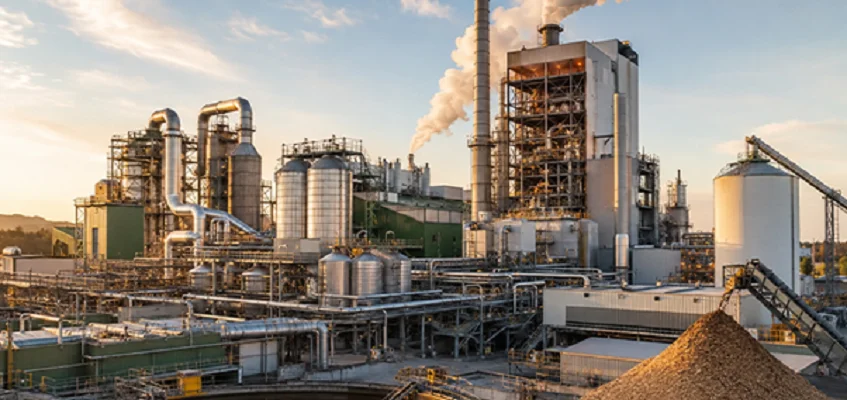
Most people picture a pulp mill as a place that simply turns wood into paper. In reality, a large part of what happens on site has nothing to do with fiber at all — it's chemistry. At the center of that chemistry is chemical recovery, the system responsible for reclaiming and reusing the cooking chemicals and energy that make Kraft pulping possible in the first place. It runs quietly in the background, but without it, the economics of pulp production would fall apart almost overnight.
This article breaks down how chemical recovery actually functions, what equipment makes it possible, and where mills are finding real gains in energy efficiency.
What Is Chemical Recovery, and Why Does It Matter?
Chemical recovery is the process of reclaiming the cooking chemicals used to break wood chips down into pulp, along with the energy locked inside the organic material that's dissolved out of the wood during cooking. In a Kraft mill, this isn't optional — it's the economic backbone of the whole operation.
Here's why: fresh cooking chemicals are expensive. Sodium hydroxide and sodium sulfide, the two workhorses of the Kraft process, would be cost-prohibitive if mills had to buy them new for every batch. Chemical recovery lets a mill regenerate roughly 95-97% of these chemicals internally, cycle after cycle. That single fact is what makes modern pulp production financially sustainable.
How Chemical Recovery Works in Kraft Pulp Mills
To understand how chemical recovery works in Kraft pulp mills, it helps to follow the liquor through its full journey — from the digester to the recovery boiler and back again.
Step 1: Cooking and liquor separation. Wood chips are cooked in white liquor (a mix of sodium hydroxide and sodium sulfide) inside a digester. This breaks down lignin, freeing the cellulose fibers that eventually become pulp. What's left behind is a dark, sticky, chemical-and-organic-rich byproduct known as black liquor.
Step 2: Evaporation. Black liquor leaves the digester at roughly 15% solids content — mostly water. It's sent to a multiple-effect evaporator system, where it's concentrated to 65-80% solids before combustion. This step is critical; liquor that's too dilute won't burn efficiently and can destabilize the recovery boiler.
Step 3: Combustion in the recovery boiler. The concentrated liquor is sprayed into the recovery boiler, where the organic material burns to generate steam, and the inorganic chemicals fall to the furnace floor as molten smelt.
Step 4: Smelt dissolving and causticizing. The smelt is dissolved in water to form green liquor, which is then treated with lime (calcium oxide) in a causticizing process. This regenerates white liquor, ready to head back to the digester.
Step 5: Lime recovery. The calcium carbonate byproduct from causticizing is calcined in a lime kiln to regenerate lime, closing yet another loop in the system.
This is the black liquor recovery process in a nutshell — a continuous, closed-loop cycle that recovers chemicals, generates power, and minimizes waste, all in one integrated system.
The Recovery Boiler: Heart of the System
If chemical recovery has a centerpiece, it's the recovery boiler. This single piece of equipment does three jobs simultaneously: it destroys organic material for energy, reduces sulfur compounds so they can be reused, and produces high-pressure steam for the mill.
Recovery Boiler Operation Basics
Recovery boiler operation is a careful balancing act. Black liquor is sprayed into the furnace through liquor guns, where it forms droplets that fall onto a char bed on the furnace floor. Combustion happens in stages:
- Drying — remaining moisture evaporates almost instantly
- Devolatilization — organic compounds break down and burn, releasing heat
- Char burning — the carbon-rich residue combusts on the bed, maintaining reducing conditions needed for sodium sulfide formation
- Smelt reduction — sodium sulfate is reduced to sodium sulfide, which is essential for the chemical cycle to close properly
Operators monitor combustion air distribution closely — primary, secondary, and tertiary air levels all affect furnace stability, emissions, and the reduction efficiency of the smelt. Get this wrong, and you risk smelt-water explosions, one of the most serious safety hazards in the entire pulp mill. Get it right, and the boiler becomes one of the most efficient combustion systems in heavy industry, often achieving thermal efficiencies above 65%.
Pulp Mill Chemical Recovery Systems: The Full Equipment Lineup
Beyond the recovery boiler itself, a complete chemical recovery system relies on several interconnected pieces of equipment working in sequence:
- Multiple-effect evaporators — concentrate weak black liquor before combustion, often recovering enough steam energy to feed later stages of the process
- Concentrators (or evaporator finishing stages) — push solids content even higher for boilers designed to fire super-concentrated liquor
- Recovery boiler — combusts liquor, produces steam, generates smelt
- Smelt dissolving tank — converts smelt into green liquor using weak wash water
- Causticizing plant (slakers and causticizers) — converts green liquor into white liquor using lime
- Lime kiln — regenerates lime from calcium carbonate mud
- Precipitators and scrubbers — capture particulate and sulfur emissions before flue gas exits the stack
Each piece of chemical recovery equipment for sustainable pulp production has to be sized and tuned correctly, because inefficiency anywhere in the chain ripples through the rest of the system. A poorly performing evaporator, for instance, forces the recovery boiler to burn less concentrated liquor, which lowers combustion efficiency and steam output.
Pulp Mill Energy: Turning Waste Into Power
One of the most underappreciated aspects of chemical recovery is its role in pulp mill energy production. Black liquor isn't just waste to be disposed of — it's fuel. The organic solids removed from wood during cooking carry substantial energy content, and burning them in the recovery boiler generates high-pressure steam that drives turbines for electricity and supplies process steam throughout the mill.
In fact, many modern Kraft mills are net energy exporters. They generate more power from black liquor combustion and biomass residues than they consume, selling surplus electricity back to the grid. This transforms the mill from an energy cost center into a revenue-generating power producer — a shift that's reshaping how the industry thinks about profitability.
Improving Energy Efficiency through Black Liquor Recovery
Mills looking to boost performance have several proven levers to pull. Improving energy efficiency through black liquor recovery typically comes down to a handful of key strategies:
Raising black liquor solids content. Higher solids content before combustion means less water to evaporate in the furnace, which directly increases boiler thermal efficiency. Many mills are pushing solids from the traditional 65-70% range toward 80%+ using advanced evaporator technology.
Optimizing combustion air control. Fine-tuning primary, secondary, and tertiary air ratios reduces excess air requirements, cuts flue gas losses, and improves reduction efficiency.
Upgrading heat exchangers and economizers. Recovering additional heat from flue gases before they exit the stack squeezes more usable energy out of every batch of liquor burned.
Condensate and hot water reuse. Evaporator condensate, if properly managed, can replace fresh water and steam demand elsewhere in the mill, reducing overall energy load.
Digital monitoring and process control. Real-time sensors and control systems help operators catch inefficiencies — fouling, scaling, or air imbalance — before they become costly problems, keeping recovery boiler operation closer to its optimal range around the clock.
Together, these improvements don't just cut costs. They reduce the mill's carbon footprint, since black liquor combustion is considered carbon-neutral biomass energy, displacing fossil fuel use elsewhere in the plant.
Why This Matters for Sustainable Pulp Production
Sustainability in pulp and paper isn't just about sourcing wood responsibly — it's equally about what happens inside the mill. Chemical recovery equipment for sustainable pulp production allows mills to:
- Recover and reuse the vast majority of cooking chemicals, cutting raw material costs and reducing environmental discharge
- Generate renewable, biomass-based energy from a process byproduct
- Minimize waste sent to landfill or wastewater treatment
- Reduce reliance on fossil fuels for steam and power generation
As environmental regulations tighten and energy costs climb, mills that invest in modern recovery systems — efficient evaporators, well-maintained recovery boilers, and smart causticizing plants — position themselves ahead of both compliance requirements and cost pressures.
Frequently Asked Questions
What is chemical recovery in a pulp mill?
It's the process of reclaiming cooking chemicals and energy from black liquor, the byproduct of Kraft pulping, so they can be reused rather than discarded.
What is black liquor?
Black liquor is the dark liquid byproduct left after wood chips are cooked with white liquor, containing dissolved lignin, organic material, and spent cooking chemicals.
What does a recovery boiler do?
A recovery boiler burns concentrated black liquor to generate steam and power while regenerating inorganic chemicals as molten smelt for reuse.
How much energy can a pulp mill generate from black liquor?
Many Kraft mills generate enough power from black liquor and biomass combustion to cover internal demand and export surplus electricity to the grid.
Final Thoughts
Chemical recovery isn't a side process in a Kraft pulp mill — it's the system that makes everything else possible. From the moment black liquor leaves the digester to the moment regenerated white liquor returns to cook fresh chips, every step is an opportunity to save chemicals, capture energy, and reduce environmental impact. Mills that treat recovery boiler operation and evaporator performance as strategic priorities, rather than background maintenance items, are the ones staying competitive in an industry where energy and sustainability increasingly decide who wins.
 Our Services
 Media Pack Download
 Newsletters
 Industrial Events