Sustainable Approaches to Chemical Pulping in the Paper Industry
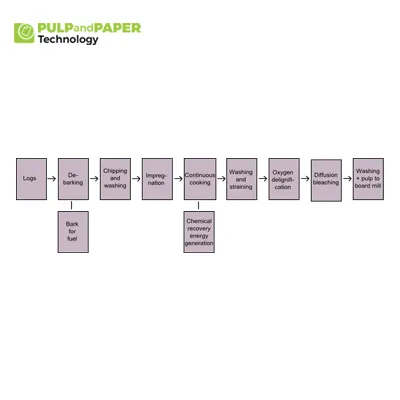
Currently the paper industry uses chemical pulping processes to process raw wood to be turned into usable paper products. This also includes swelling the structure of the lignin to ‘set up’ the cellulose fibre for paper making. However, classical chemical treatments employed in pulping steps are often energy consuming and release a great deal of waste. Sustainable enzymatic technologies, green chemistry, and sustainability concepts plus bio-based chemicals in pulping are getting consideration as the new sustainable program to make paper manufacturing more sustainable.
Chemical Pulping Process in Papermaking
Chemical pulping is important in making quality, strong paper since it reduces the amount of lignin in the fiber. In the paper industry the two common processes are; Kraft process and Sulfite process. Kraft process in the process of making paper involves use of chemicals, which are very aggressive for example, sodium hydroxide and sodium sulfide to swell the lignin in order to separate cellulose fibers. It is also known as the Kraft process and has the following benefits: The paper produced is highly strong; chemicals used are easily recovered. Fully bleached chemi-mechanical pulp derived from this process is used in many applications and is durable.
However, the Kraft process in papermaking and other traditional chemical pulping processes have the followings environmental problem. The releasing of these chemicals and energy used in the pulping process pollutes both air and water in the environment. Environmental problems associated with chemical pulping remain an important challenge in sustainable development that has led to the development of new environmentally-friendly pulping technologies.
Sustainable Enzymatic Solutions in Pulp Production
Among these possible ways of increasing Chemical Pulping Processes sustainability is the implementation of sustainable enzymatic solutions. From the literature, biological catalysts from nature known as enzymes are capable of degrading and solubilizing lignin and other aspect of the woody biomass with less bulk and environmental effects. That is why these enzymatic solutions are more sustainable in terms of the decrease of required severe chemicals in the course of pulp manufacturing and the minimum energy consumption.
The combined use of these enzymatic methods can assist in using pulp and paper industry chemicals that are conventional and improve sustainable paper production.
Green Chemistry and Sustainability in Pulp Production
Applying green chemistry and sustainability concepts in chemical pulping process; the pollution output could be easily minimized. Green chemistry and sustainability are about developing chemical procedures that are friendly to the environment, energy efficient and which do not use harmful substances. For example, scientists are devising better ways of processing pulp and paper with chemicals other than the dangerous chlorine-based bleaches. Also on the horizon for green chemistry is the opportunity for creating new sustainable pulping technologies that are far superior to the existent methods of the production.
Bio-Based Chemicals in Pulp Production
The other areas that can be developed in sustainable paper making are through the utilisation of bio-based chemicals in manufacturing pulp. These chemicals include glycol ester containing compounds which can be obtained from renewable biological feedstock and can replace several chemical that are used in the conversion of pulp and paper and other coating processes. Another advantage of bio-based chemicals is that, unlike traditional chemicals that harmfully affect the environment as seen from their toxicity to aquatic lives, they are biodegradable. However, as the industry moves to these renewable chemicals the chemical pulping process can transform and embrace the principles of the circular economy.
Environmental Impacts of Chemical Pulping
The effects of chemical pulping are that it produces large amounts of wastewater and gaseous emissions. Chemically pulped paper production process results in generation of considerably big amounts of wastewater laden with chemically pulps, organic compounds and many pollutants. Managing these impacts needs sustainable management of pulp and paper wastewater. Efficient back end technologies on water treatment and waste disposal are currently being used to treat the water before its recycling or reusing and also for the recovery of byproducts from the waste streams. With these methods, the chemical pulping process can be run with better concern to the environment and more effectively to the available resources.
Advantages of Chemical Pulping
As with most forms of initial pulping however there are problems associated with the environmental impact that still comes from chemical pulping. On the comparison of chemical and mechanical pulping one gets to know that the chemically pulped paper is stronger, durable and better looking and print than mechanical one.
In papermaking for instance, the Kraft process permits natural return of chemicals and the recycling of chemicals is often possible. Furthermore, chemical pulping yields very clean pulp and it can make high-quality paper from the packaging paper to the writing paper.
New Sustainable Pulping Technologies
Environmentally, chemical pulping presents some challenges therefore innovation is the way forward. There are new generation improved pulping technologies in the offing, currently existing technologies include the use of sustainable enzymatic solutions to reduce chemical usage in the process and energy consumption. Of the technologies applied in pulp production, these technologies embrace green chemistry and sustainability principles and use bio-based chemicals instead of the poisonous chemicals used heretofore. On the same note, improvement in the management of pulp and paper wastewater is also posing a solution to the problem facing the paper manufacturing industry.
Conclusion
Paper manufacturing is a chemical process that has come under pressure to turn green. It is therefore possible to mitigate the effects of the paper production on the surrounding environment through the application of enzymatic solutions in the processing, use of green chemistry and sustainability principles and the use of the bio based chemicals in paper making. The introduction of fresh sustainable pulping techniques and progression of sustainable management of wastewaters for pulp and paper industries are providing new directions for future sustainability in paper production. By these endeavors, the prospects for the chemical pulping process can sustain and maintain the production of the premium quality goods the populace so depends on without compromising the environment.
 Our Services
 Media Pack Download
 Newsletters
 Industrial Events