Papermaking Process: A Complete Industrial Guide for Paper Manufacturing
Introduction
Paper is used in the modern society in so many ways. Packaging and printing is just one of the applications for paper, and it's used in products for hygiene as well as specialty industrial applications. Behind the paper, there is a complex procedure of making the paper, which goes through various stages, each of which is precisely controlled.
The papermaking process has made a lot of changes in the past century. The craft, which started as a labor-intensive process, has grown into an industrial process and can manufacture thousands of tons of paper a day. In today's pulp and paper industry, high-tech machines, process control systems and environmental friendly manufacturing methods are used to satisfy the ever-rising global demand.
To comprehend the paper manufacturing route, you should take into account each step, extending from pulp preparation to the last completing tasks. This guide covers all aspects of paper manufacturing from raw material to finished product and includes all the technologies, equipment and processes used in up to date paper mills.
Understanding the Papermaking Process
The cellulose fibres are converted to a continuous sheet of paper in the simple papermaking process. The fibres are suspended in water, made into a sheet, pressed, dried and finished based on the use.
The main aim of paper-making is to make a sheet of paper with the chosen properties such as:
- Strength
- Thickness
- Brightness
- Smoothness
- Opacity
- Printability
- Moisture resistance
The superiority of the final paper depend on on the quality of raw materials used, process control and efficiency of manufacturing equipment used throughout the production process.
What are the raw materials that are used to make paper?
Study of the steps in the paper manufacture should comprise an understanding of the materials used.
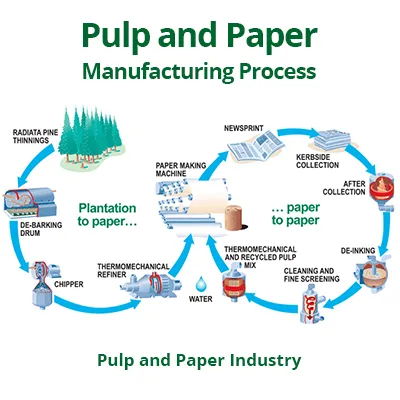
Wood Pulp
Still, cellulose fibre is the most used source of cellulose. Softwoods (such as pine) have long fibres which are used to give strength, while hardwoods (such as beech) have short fibres which are smoother and more appropriate for printing.
Recycled Fiber
The majority of mills use recycled paper in their processes. Recycled paper is repulped, cleaned and goes through the machines again.
Non-Wood Fibers
Certain paper grades utilize alternative fiber sources such as:
- Bamboo
- Bagasse
- Wheat straw
- Hemp
- Kenaf
The materials provide diversity for fiber supplies, and support sustainability efforts.
Chemical Additives
In addition, modern paper-making also utilizes a range of different additives such as:
- Fillers
- Sizing agents
- Retention aids
- Dyes
- Optical brighteners
- Strength enhancers
These are additives which contribute to specific requirements for performance.
Papermaking Process Flow: An Overview
Paper-making is a general process that involves the following steps:
- Pulp preparation
- Stock cleaning and screening
- Sheet formation
- Pressing
- Drying
- Surface treatment
- Finishing
- Winding and packaging
The process transforms wet pulp into a marketable paper product in each step.
Step 1: Pulp Preparation
The first step of the pulp to paper process is to make a fiber suspension that is ready to form paper.
Pulp may arrive from an integrated pulp mill or be produced onsite. The pulp is added to large tanks and mixed with water to form a slurry with about 95% to 99% water.
Refining
Refining is an important operation which affects the fiber characteristics.
During refining:
- Fibers become more flexible
- Fiber bonding improves
- Surface area increases
- Sheet strength is enhanced
Refining equipment applies controlled mechanical action to improve fibers' paper web forming capability.
Blending
Various grades of pulps may be mixed to meet desired properties.
For example:
- Long fiber provide better tear strength.
- Short fibers improve smoothness.
- Recycled fibers reduce production costs.
The ratio of blending is varied according to the desired grade of paper.
Step 2: Screening and Cleaning
The pulp has to be worn of contaminants after it has been prepared, before it can be made into paper.
Screening
Pressure screens remove oversized particles such as:
- Fiber bundles
- Plastic fragments
- Wood shives
This step helps ensure a uniform paper sheet.
Centrifugal Cleaning
Centrifugal force is used by cleaners to separate particles by density.
Materials removed may include:
- Sand
- Staples
- Metal particles
- Glass fragments
Effective cleaning improves machine performance and paper quality.
Step 3: Stock Preparation
Stock preparation involves adjusting pulp characteristics before the material enters the paper machine.
At this stage, operators control:
- Fiber consistency
- pH levels
- Additive dosage
- Retention chemistry
Various chemicals are introduced to improve product performance.
Common additions include:
Fillers
Minerals that are added to enhance:
- Brightness
- Opacity
- Surface smoothness
Sizing Agents
Sizing controls liquid penetration and improves printability.
Retention Aids
Retention chemicals help keep fine particles and fillers within the paper sheet.
Consistent machine operation and product quality is the result of the proper preparation of the stock.
Step 4: Sheet Formation
Sheet formation is often considered the heart of the papermaking process.
The prepared stock enters the headbox, which distributes the fiber suspension evenly across the width of the machine.
Headbox Operation
The headbox produces pulp which is dropped onto a moving forming fabric.
The fiber suspension is usually a watery mix of fibers that contains less than 1% fiber and over 99% water.
Uniform distribution is essential because it directly affects:
- Basis weight
- Formation quality
- Sheet consistency
Forming Section
The slurry flows over the forming fabric, and the water starts to drain through the mesh fabric.
The use of gravity, foils, vacuum boxes, and suction elements speed up the water removal process.
During this stage:
- Fibers interlock
- A continuous sheet begins to form
- Initial sheet strength develops
By the end of the forming section, the sheet usually contains approximately 18% to 22% solids.
Step 5: Press Section
The newly formed paper web remains extremely fragile and contains significant moisture.
The press section removes additional water using mechanical pressure.
Press Nips
The paper sheet passes through multiple press nips consisting of rollers and specialized felts.
These components:
- Absorb water
- Improve sheet density
- Increase fiber bonding
The mechanical water removal is much more energy efficient than the thermal drying, and this is an important step.
Benefits of Pressing
Effective pressing provides:
- Reduced steam consumption
- Better sheet strength
- Improved runnability
- Enhanced machine efficiency
Solids content is normally between 40% and 50% after pressing.
Step 6: Drying Process
The purpose of the drying section is to get rid of the last water from the paper sheet.
This stage consumes the majority of energy used in paper production.
Steam-Heated Dryers
The paper passes through a bank of large steam heated cylinders.
Water evaporates from the sheet as it is heated.
Today's paper machines can have up to 40 drying cylinders grouped in several banks.
Moisture Control
It is important to have moisture control.
Excessive moisture can result in:
- Curling
- Wrinkling
- Reduced strength
Brittleness and waste of energy are possible consequences of over drying.
Average paper moisture when it leaves the drying section in most cases is in the range of 4% to 8%.
How Does the Papermaking Process Work in Industry Step by Step?
In conclusion, the Papermaking process step by step in industry is very simple:
- Raw fibers are converted into pulp.
- Pulp is refined and blended.
- Contaminants are removed.
- Additives are introduced.
- Fibers are formed into a sheet.
- Water is removed through pressing.
- The sheet is dried using heated cylinders.
- Surface properties are enhanced.
- Paper is wound, cut, and packaged.
- Finished products are shipped to customers.
All stages are controlled automatically to maintain quality and productivity.
 Our Services
 Media Pack Download
 Newsletters
 Industrial Events