European Tissue Symposium (ETS)
-(1).webp)
About: Carlos Reinoso - Director General
Carlos Reinoso is Chairman and Director General of the European Tissue Symposium (ETS), with over 25 years of experience in public affairs and industrial associations. He specialises in European policy, stakeholder engagement, and strategic advocacy for the pulp and paper sector, with previous leadership roles at ASPAPEL and CEPI
Abstract:
The European Tissue Symposium is the European trade association representing the tissue sector, bringing together leading manufacturers across the value chain. It supports its member companies through policy engagement, data-driven insights, and advocacy for a competitive and sustainable regulatory environment.
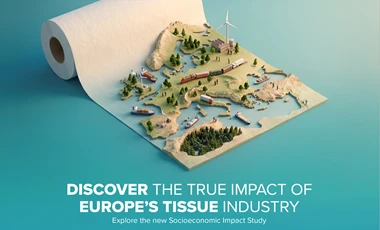
As part of this work, ETS commissioned a European socioeconomic impact study, conducted by Steward Redqueen, to quantify the sector’s contribution to the economy, employment, and sustainability, providing a comprehensive evidence base to support industry positioning and policymaking.
1. How do shifting macroeconomic conditions across Europe shape the growth trajectory of the tissue industry?
Macroeconomic conditions such as inflation, energy pricing, and evolving consumer spending patterns are undoubtedly shaping the operating environment for the tissue industry. However, tissue remains an essential product, and demand tends to be relatively resilient compared to other consumer goods.
What we are seeing is not so much a decline in demand, but a shift in consumption patterns and cost structures. The socioeconomic impact study highlights that the tissue sector plays a stable and important role in Europe’s economy, supporting around 421,000 jobs and generating €36.6 billion in value added annually.
This inherent resilience helps the industry navigate macroeconomic volatility while continuing to deliver essential hygiene products to consumers.
2. What are the most significant cost pressures currently impacting tissue manufacturers?
Energy, fibre, and logistics costs are the main pressures today.
Fibre sourcing includes both virgin pulp and recycled paper, making the efficiency of recycling systems and access to sustainable forestry equally important. Managing this balance is key to maintaining both cost control and sustainability performance.
3. How are European producers navigating volatile energy markets while advancing sustainability goals?
Energy remains one of the most challenging aspects of tissue production. European producers are responding by investing in energy efficiency, transitioning to renewable energy sources, and optimizing production processes.
Sustainability and competitiveness must go hand in hand.
4. What structural changes have been implemented in response to supply chain disruptions?
Recent disruptions have accelerated a shift toward more resilient and diversified supply chains. Companies are reassessing sourcing strategies, increasing flexibility, and, in some cases, regionalizing certain aspects of supply.
This has reinforced the importance of Europe’s integrated value chain - from forestry and pulp to recycling systems and finished products - all of which contribute to economic value and employment.
5. How do fluctuations in pulp prices impact pricing models and contracts?
Pulp price fluctuations directly impact pricing models, requiring more flexible contracts and closer collaboration across the value chain.
This highlights how interconnected the sector is from upstream forestry and pulp production to downstream distribution where changes in one part of the chain quickly influence the entire ecosystem.
6. How is the rise of private label products affecting the industry?
Private label growth reflects evolving consumer behavior, particularly in periods of economic uncertainty. While it increases competitive pressure, it also drives efficiency and innovation across the industry.
Tissue manufacturers are adapting by differentiating through quality, sustainability, and product innovation, while continuing to deliver value across the supply chain.
7. How do economic performance and consumption patterns differ across Europe?
Across all regions, the tissue sector plays a vital role in supporting local economies and essential supply.
The ETS study shows that €0.91 of every €1 spent on tissue products remains within Europe, highlighting the sector’s strong local economic multiplier and deep integration across industries, including recycling and forestry.
8. How do companies balance innovation with cost discipline?
Innovation today is focused on efficiency and value whether through smarter production, sustainable design, or optimized packaging. It’s about strengthening competitiveness while managing costs.
9. Are sustainability initiatives translating into measurable economic value?
Yes, increasingly so. Initiatives such as energy efficiency, water reduction, and responsible fibre sourcing - including both pulp and paper for recycling - improve operational efficiency and reduce risk.
Over time, these efforts contribute to cost savings, supply security, and stronger alignment with regulatory expectations and consumer preferences.
10. How are EU regulations reshaping investment decisions?
Regulation is a key driver of investment decisions. It’s important that EU frameworks support both sustainability goals and the competitiveness of Europe’s bio-based industries.
The tissue sector contributes to circular economy objectives through sustainable forestry and well-established paper recycling systems.
11. What role do labor shortages and rising wages play?
Labour shortages and rising wage expectations are influencing a greater focus on automation and workforce optimization. Companies are investing in technologies that improve efficiency while also enhancing workplace safety and job quality.
At the same time, the tissue sector remains a significant employer, supporting over 421,000 jobs across Europe, with around 48,000 directly in manufacturing and the majority across the wider value chain.
12. How competitive is Europe’s tissue industry globally?
Europe’s tissue industry remains highly competitive, particularly in terms of quality, sustainability, and innovation. However, it operates in a challenging global environment with cost pressures from lower-cost regions. This makes it essential to ensure robust and consistently enforced fair trade practices, guaranteeing a level playing field and preventing distortions of competition caused by uneven enforcement or weaker sustainability and social requirements.
13. How are digitalization and smart manufacturing contributing to resilience?
Digitalisation is improving efficiency, reducing waste, and strengthening resilience. Smart manufacturing is becoming central to how the tissue industry operates.
These technologies also support productivity gains across the value chain, reinforcing the sector’s economic contribution.
14. What key trends will define the next 5–10 years?
Looking ahead, several trends will shape the future of the tissue industry: the transition to a low-carbon economy, continued innovation in sustainable products, increasing digitalization, and evolving consumer expectations.
At the same time, the sector’s fundamental role as a provider of essential hygiene products and its contribution to Europe’s economy will remain unchanged. For every €1 spent on tissue products, around €0.91 remains within Europe as value added, highlighting the sector’s strong local economic impact.