Smart electrification in the Tissue sector: maximizing efficiency and quality with cutting-edge solutions
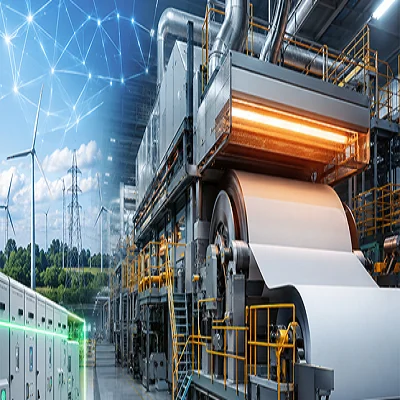
The evolution of global geopolitical scenarios is redefining priorities within energy markets, emphasizing cost stability and resource availability. For energy-intensive industries, such as the paper sector, this translates not only into a state of instability, but also into a valuable opportunity to accelerate toward innovative operational models. Although recent international fluctuations have impacted market dynamics, they now serve as a driver for adopting more resilient, innovative technological solutions.
In this framework, a "flexible" approach emerges as a key factor. This is not limited to the ability to adjust primary drying process parameters – such as temperature, impingement velocity, and Yankee dryer pressure – but also extends to energy source selection. Indeed, this enables real-time diversification of the energy mix, shifting consumption toward the most cost-effective options based on fluctuating market prices, even on a daily basis.
To this end, Toscotec has established a long-term R&D roadmap focused on alternative solutions to natural gas. The company's commitment has advanced along two primary tracks: on one hand, the integration of hydrogen and syngas, and on the other, the development of cutting-edge technologies for the direct use of electrical energy as a thermal source.
As a pioneer in this field, Toscotec was the first to introduce high-power electric heat exchangers into tissue machines. This technology is the result of dedicated engineering focused on optimizing key parameters, including heat exchanger dimensions, material selection, power density, and surface temperature control. Today, the company's solutions draw on extensive proprietary know-how – the result of more than three years of direct field experience.
Among these technologies, the TT e-Powered Hood – Toscotec's innovative electric heating solution for Yankee hoods – was launched in 2023 with the installation of a 350-kW prototype on the pilot machine at the Voith Technology Center in Heidenheim. The transition to industrial scale occurred the following year, in 2024, with a state-of-the-art supply for the new Toscotec line at the French mill of MPH1865. Here, two 2.5 MW heat exchangers operate in synergy with gas burners, ensuring unprecedented operational flexibility.
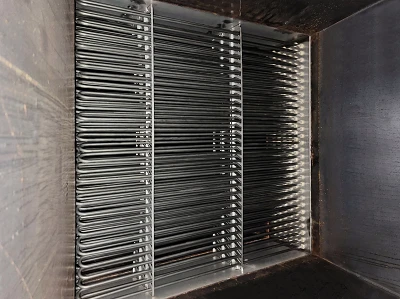
The new milestone occurred in 2025 with the world’s first full-electric machine – covering both the air system and steam generation. The project involved the rebuild of a 2015 Toscotec line at Fortissue, where the integration of two 2 MW heat exchangers and a 3.5 MW electric boiler (with a capacity of 5 t/h) redefined industry standards. At this mill, the boiler is paired with a TT SteamBooster – a steam generator that recovers energy from the hood exhaust gases – to maximize the thermal efficiency of the entire site.
The next major milestone is set for the second quarter of this year, with the startup of a TAD machine section featuring a massive 10 MW heater, confirming the full scalability and commercial readiness achieved by these solutions.
Across all operational installations, customers leverage the advantages of energy tariffs that, in certain parts of Europe, exhibit drastic fluctuations throughout the day. The systems switch from natural gas to electrical power – and vice versa – within minutes, without any variation in the machine's operating parameters. These power source transitions occur gradually and are fully automated. Consequently, the machine maintains a steady-state operation, with no recorded variations in paper moisture trends, hood temperatures, or Yankee dryer pressure.
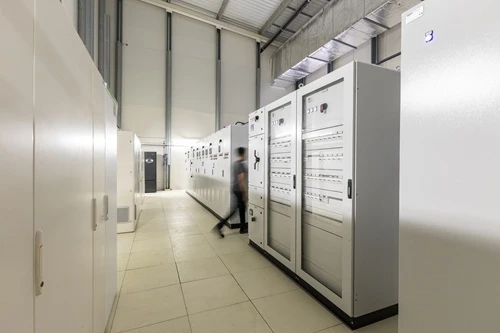
Toscotec's solutions easily integrate into both greenfield projects – where space is already allocated during the layout phase – and rebuilds. To evaluate the installation of the TT e-Powered Hood, a technical site survey allows for the customization of the heat exchangers’ geometry and their positioning with respect to the burners (whether existing or new), ensuring accessibility for maintenance. Optimization also extends to the electrical system, with cable routing studies designed to minimize costs and line losses.
In parallel with direct heating, Toscotec continues to develop high-efficiency systems such as high-temperature heat pumps. Although the latter require higher capital expenditure compared to electric resistance heaters, they represent the next generation of thermal efficiency for process fluids.
Among the most recent innovations developed by Toscotec in the field of direct electric heating, the TT ElectricProfiler stands out for paper moisture profile control. This patented electric profiling system is specifically engineered to optimize the cross-direction (CD) moisture profile of the tissue web.
Generally, on almost all hoods installed worldwide, one of the two units is equipped with profile control dampers. These dampers are installed in each crescent header of the profiling hood to help operators correct small deviations in the moisture profile. The limitation of this solution is that the damper can only reduce the drying capacity of the section where it is located. The damper operates by lowering the inlet flow rate to locally reduce evaporation power. Operating systems are frequently found where many of the dampers are kept fractionally closed, partially dissipating the power expended by the process fan.
Conversely, the patented TT ElectricProfiler system by Toscotec uses low-power, modulating electric heaters to raise or lower the temperature of each section based on process requirements. The corrective action is therefore effective for both moisture peaks and over-dried zones. The pressure drop across the heat exchangers is extremely low and does not significantly impact the energy loads of the air system.
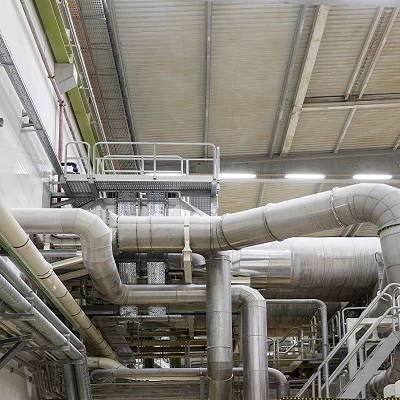
Another advantage over existing solutions is the absence of moving parts, such as actuators, lever arms, and dampers, resulting in higher reliability and reduced maintenance requirements.
In conclusion, Toscotec positions itself as a strategic partner capable of providing all types of process heating via electrical systems, offering fully engineered, customized, and – above all – proven and operating solutions. Today, three years after the initial installation, we have gained the knowledge and experience required to ensure high performance, outstanding reliability, and smooth integration with conventional drying systems.
 Our Services
 Media Pack Download
 Newsletters
 Industrial Events


Author Bio:

Stefano Pecchia
Energy Technology Director, Toscotec
Stefano Pecchia has more than twenty-five years of experience as Technical Manager in the paper industry. He has worked on the design of energy and drying technologies for global key players, both in tissue and paper and board. Stefano holds a master’s degree in Nuclear Engineering from the University of Pisa and a postgraduate qualification in Paper and Board. As Energy Technology Director at Toscotec, he is in charge of product development for energy efficiency and decarbonization, including solutions for electrification and use of carbon-free fuels.