Industrial Pipe Fittings and Flow Control Components for Reliable Paper Mill Operations
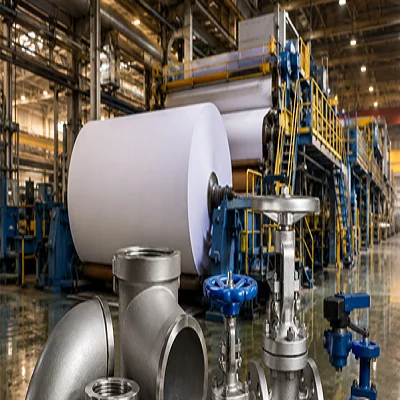
Paper mills run on water, steam, and chemistry moving through miles of pipe, around the clock, without pause. When any part of that network fails — a corroded joint, a leaking valve, a fitting that can't handle the pressure swings of a pulping cycle — the cost isn't measured in a single repair bill. It's measured in downtime, wasted fiber, contaminated batches, and missed shipments. That's why the choice of pipe fittings and flow control components is never really a small decision in a paper mill. It's a decision that shapes uptime, safety, and product quality for years.
This article looks at why industrial piping matters so much in pulp and paper operations, what makes a fitting or component genuinely reliable in this environment, and how mills can build pipeline systems that hold up under constant chemical, thermal, and mechanical stress.
Why Paper Mills Demand a Different Standard of Piping
Paper manufacturing is not a gentle process. Wood chips are cooked under pressure and high heat, pulp is bleached with aggressive chemicals, and finished stock is pumped at high volumes through washers, screens, and dryers before it ever becomes a sheet of paper. Along the way, the piping network is exposed to:
- Corrosive chemicals — chlorine dioxide, sodium hydroxide, hydrogen peroxide, and sulfuric acid are common in pulping and bleaching stages, and they attack ordinary carbon steel quickly.
- High temperatures and pressure cycling — steam lines feeding digesters and dryers see repeated thermal expansion and contraction, which stresses joints and fittings over time.
- Abrasive slurries — pulp stock, especially with recycled fiber, carries grit and fine particulate that erodes pipe walls and valve seats.
- High-volume, continuous flow — mills often run 24/7, so there's little room for scheduled shutdowns beyond planned maintenance windows.
Given this combination, generic piping components rarely survive long. Industrial piping systems for paper manufacturing need to be engineered specifically for chemical resistance, pressure tolerance, and mechanical durability — not simply sourced from a general industrial catalog and hoped to work.
The Role of Pipe Fittings in Mill Reliability
Fittings are the connective tissue of any pipeline — the elbows, tees, couplings, reducers, and flanges that let a system change direction, branch off, or join to equipment. They seem like small parts, but they are frequently the weakest link in a piping network, simply because every joint is a potential failure point.
In a paper mill, a poorly matched fitting can lead to:
- Leaks at weld or thread points under thermal cycling
- Premature corrosion where dissimilar metals meet
- Pressure drops that reduce process efficiency
- Unplanned shutdowns for emergency repair
This is why experienced mill engineers treat pipe fitting solutions for pulp processing plants as an engineering decision, not a procurement afterthought. The right fitting is selected based on the specific line it serves — a bleach plant line, for example, has very different requirements than a whitewater return line or a steam header.
Common Fitting Types Used in Paper Mill Piping
- Elbows and bends for directional changes in high-flow slurry and steam lines
- Tees and crosses for branching process flows to multiple pieces of equipment
- Reducers to transition between pipe diameters as flow requirements change
- Flanged connections for sections that require regular inspection or maintenance access
- Unions and couplings for quick disconnection during cleaning or equipment swaps
- Each of these needs to be specified with the correct material, wall thickness, and connection type for the specific process condition it will face.
Why Stainless Steel Pipe Fittings Dominate in Pulp and Paper
Among material choices, stainless steel pipe fittings are the standard in most modern paper mills, and for good reason. Grades like 304 and 316L offer strong resistance to the chlorine compounds and acidic environments common in bleaching and chemical recovery areas, while still holding up structurally under the temperatures found in steam and hot process water lines.
Compared to carbon steel or PVC alternatives, stainless steel fittings typically deliver:
- Longer service life in corrosive chemical environments, reducing replacement frequency
- Better hygiene and cleanability, which matters in mills producing food-grade or tissue paper products
- Higher pressure and temperature tolerance, suited to digester and dryer sections
- Lower long-term maintenance cost, even though upfront material cost is higher than carbon steel
For lines carrying the most aggressive chemicals — chlorine dioxide bleaching stages, for instance — mills sometimes go further, specifying higher-alloy stainless or duplex stainless fittings where 304/316 grades would still degrade too quickly. The right specification depends on a careful read of the chemical concentration, temperature, and flow velocity at that specific point in the process.
Flow Control Components: Keeping the Process in Balance
Fittings connect the pipeline, but flow control components are what actually manage the process — regulating pressure, directing flow, isolating sections for maintenance, and protecting equipment from surges. In a paper mill, this category typically includes:
- Control valves that regulate flow rate and pressure in real time, often tied into automated process control systems
- Check valves that prevent backflow, particularly important in pump discharge lines and chemical dosing systems
- Butterfly and gate valves used for isolation during maintenance or line changeovers
- Pressure-reducing valves that protect downstream equipment from steam or hydraulic surges
- Strainers and filters that catch debris before it reaches pumps, nozzles, or precision equipment
Reliable flow control components in paper mills are the difference between a process that runs smoothly and one that requires constant manual adjustment. A control valve that sticks or a check valve that fails to seat properly doesn't just cause inefficiency — it can lead to product quality issues in the finished paper, contamination in the chemical recovery loop, or damage to expensive pumping equipment.
Because paper mills often integrate these components into automated distributed control systems (DCS), flow control hardware also needs to be compatible with instrumentation — accurate positioning, reliable actuator response, and consistent performance over thousands of open-close cycles.
Process Pipeline Design: Planning for the Whole System, Not Just the Parts
It's tempting to think about pipe fittings and valves as individual purchases, but reliability really comes from process pipeline design — how the entire system is engineered to work together. A well-designed pipeline system in a paper mill accounts for:
- Flow velocity and pipe sizing — undersized piping increases erosion and pressure loss; oversized piping wastes capital and can cause settling in slurry lines.
- Material compatibility across the system — mixing incompatible metals at joints can accelerate galvanic corrosion.
- Thermal expansion allowances — steam and hot process lines need expansion joints or loops to avoid stressing fittings and welds.
- Access for maintenance — flanged sections and isolation valves should be placed where technicians can reach them without shutting down unrelated equipment.
- Redundancy in critical lines — parallel piping or bypass lines for pumps and valves in continuous-run areas reduce the impact of a single component failure.
Mills that invest in this level of upfront process pipeline design consistently report fewer unplanned outages and lower total cost of ownership over the life of the piping system, even though the initial engineering and material costs are higher than a minimal, reactive approach.
Choosing the Right Industrial Piping Solutions Partner
Given how specialized these requirements are, most paper mills work with suppliers who understand pulp and paper processes specifically, rather than treating the mill as a generic industrial customer. A good partner for industrial piping solutions should be able to:
- Recommend material grades based on the actual chemical and thermal conditions of each line
- Supply fittings and valves that meet relevant industry standards (ASME, ANSI, and mill-specific specifications)
- Support both new pipeline installations and retrofits of aging systems
- Provide technical documentation and traceability for regulatory and audit purposes
- Offer responsive support for urgent replacement needs, since mill downtime is costly by the hour
This kind of partnership matters most during plant expansions, chemical recovery upgrades, or when a mill is troubleshooting recurring leak or corrosion problems in a specific process area.
Frequently Asked Questions
What are the most common causes of pipe fitting failure in paper mills?
The leading causes are chemical corrosion from bleaching agents, thermal fatigue from repeated steam cycling, and erosion from abrasive pulp slurries. Choosing the correct material grade and fitting design for each specific line significantly reduces these failure modes.
Why is stainless steel preferred over carbon steel for paper mill piping?
Stainless steel resists the chlorine-based chemicals and acidic conditions found in pulping and bleaching processes far better than carbon steel, which corrodes quickly in those environments. While stainless steel costs more upfront, it lowers long-term maintenance and replacement costs.
How often should flow control components be inspected in a paper mill?
Inspection frequency depends on the line's duty — critical control valves in continuous chemical service are often checked on a monthly or quarterly basis, while isolation valves in less demanding areas may follow standard annual maintenance schedules. Mills with automated monitoring can catch performance drift earlier through DCS trend data.
Can existing paper mill piping systems be retrofitted with better flow control components?
Yes. Many mills upgrade aging valves and fittings incrementally during planned maintenance windows rather than replacing an entire system at once, prioritizing the lines with the highest failure history or the most critical process impact.
Final Thoughts
Reliable paper mill operations depend on piping infrastructure that's built for the specific chemical, thermal, and mechanical demands of pulp and paper processing — not generic industrial parts pressed into service. From the selection of stainless steel pipe fittings to the design of complete pipeline systems with properly specified flow control components, every decision in the process pipeline compounds over the life of the plant. Mills that partner with suppliers who understand these demands, and that approach piping as a system rather than a collection of individual parts, consistently see fewer failures, less downtime, and lower total operating costs over time.
 Our Services
 Media Pack Download
 Newsletters
 Industrial Events