Paper Bag Machines: How They Transform Kraft Rolls into Finished Bags
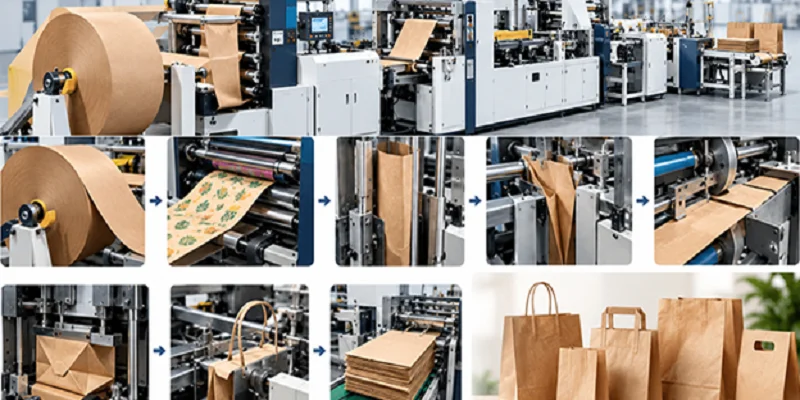
Every day, a plain roll of brown kraft paper turns into thousands of sturdy bags that carry groceries, bread and cement across the world. The magic behind it is the paper bag machine. It unrolls, folds, glues and cuts the paper in a few seconds per bag, and it never gets tired. So how does it really pull this off?
If you are thinking about starting a packaging business, or upgrading your current line, understanding what happens in between is the smartest first step. This guide walks you through exactly that, in plain language, without the brochure-speak.
The Quick Answer: How Does a Paper Bag Machine Work?
A paper bag making machine unwinds a roll of kraft paper, prints it (optional), forms it into a tube, glues the seam, cuts it to length, creates the bottom fold, glues the base and delivers the finished bag. On an automatic paper bag machine, all of this happens in one continuous pass at speeds of roughly 40 to 400 bags per minute, depending on the model.
That is the short version. Let's open the hood.
Why Kraft Paper Is the Star of the Show
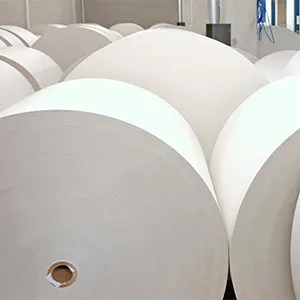
Before we talk machinery, a quick word on the material. Kraft paper is made from wood pulp using the sulfate process, which gives it a strength that ordinary paper simply cannot match. It tears less, carries more weight and handles glue beautifully. That is why most paper bags you see in supermarkets, bakeries and fashion stores are kraft.
With plastic bans spreading across many countries, demand for the kraft paper bag machine has exploded. Retailers want a greener option, and customers are happy to pay slightly more for it. For manufacturers, that means steady orders and a market that is still growing.
From Roll to Bag: The Process, Step by Step
Here is how a typical kraft paper bag manufacturing machinery line handles a roll. Think of it as an assembly line that never stops for coffee.
1. Reel loading and web guiding
An operator loads the kraft roll onto the unwinding stand. Modern machines use hydraulic or pneumatic shafts so heavy rolls, sometimes over 800 kg, lock in place without a struggle. A web guide (an edge-position controller) keeps the paper running straight. If the paper drifts even a few millimetres, the glued seam goes crooked and the whole batch suffers. So this small sensor matters more than it looks.
2. Printing (inline flexo, if fitted)
Many lines include an inline flexographic printing unit. Your logo, brand colours or pattern are printed on the paper as it moves. Water-based inks are common because they stay eco-friendly and food-safe. If you only need plain bags, you can skip this and run unprinted kraft.
3. Tube forming
Now the flat paper becomes a tube. A former (think of it as a shaped metal guide) folds the web around itself. The edges overlap slightly, and a hot-melt or water-based glue is applied along the seam. Pressure rollers squeeze it shut. This is the moment the paper starts to look like a bag.
4. Side gusset creation
For a square-bottom or flat-handle bag, the machine folds in the side gussets. These are the pleats that let the bag expand when you fill it. Precision here decides whether your bag stands upright on a counter or flops sideways.
5. Cutting to length
A rotary or flying knife cuts the tube into individual pieces. The cut length is usually set through a servo motor, so you can change the bag size by entering a number on the touchscreen rather than swapping out heavy parts. That is a huge time-saver when you run mixed orders.
6. Bottom opening, folding and gluing
This is the trickiest stage. The machine opens the bottom of the tube, folds the flaps in a precise sequence, applies glue and presses the base shut. Cheap machines struggle here, which is where leaks and weak bottoms come from. Good machines get it right thousands of times an hour.
7. Handle attachment (optional)
For shopping bags, a separate handle-making and pasting unit attaches twisted paper or flat handles. Some lines do this inline. Others use a secondary machine. If you plan to sell carrier bags, factor this into your budget early.
8. Counting and stacking
Finished bags are counted, stacked and pushed out. Operators bundle them, strap them and send them to dispatch.
Types of Paper Bag Making Machines
Not every business needs the same setup. Here is how the main categories compare.
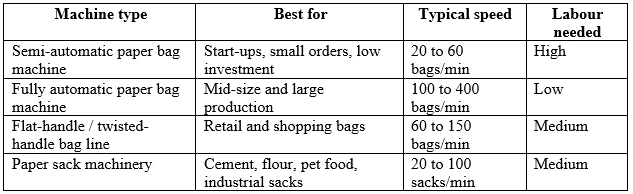
(Speeds vary by brand, paper weight and bag size. Always ask your supplier for tested figures on your own paper.)
Paper sack machinery: the heavyweight cousin
While a standard bag making machine produces lunch bags and carrier bags, paper sack machinery handles bigger jobs. It makes multi-wall sacks for cement, grain, chemicals and animal feed. These sacks use two to four layers of kraft, sometimes with a plastic liner. The machines are larger, slower and built for strength rather than speed.
What to Look for in Automatic Paper Bag Machines for Industrial Production
If you are buying automatic paper bag machines for industrial production, the spec sheet can feel overwhelming. Focus on these seven things.
- Paper GSM range. Check the minimum and maximum paper weight the machine can handle. Most run 40 to 150 GSM, and heavier sacks need more.
- Bag size flexibility. How quickly can you change width, length and bottom size? Servo-controlled changeovers save hours.
- Real speed, not claimed speed. Ask for a live demo on your own kraft. Maximum speed on a brochure is often a best-case number.
- Glue system. Hot-melt gives faster setting. Water-based glue is more eco-friendly. Choose according to your customers.
- Control system. A PLC with a touchscreen reduces errors and makes training easier.
- Safety features. Guards, emergency stops and sensors protect your team and your insurance record.
- After-sales support. Spare parts, local engineers and training matter more than a small discount.
Costs and Return on Investment
Prices vary widely. A basic semi-automatic setup can start in the low lakhs of rupees, while a high-speed fully automatic line with inline printing and handle making can run into crores. Instead of guessing, work out your numbers like this:
- Estimate your monthly bag output and selling price per bag.
- Subtract paper, glue, ink, power and labour costs.
- Divide the machine cost by your monthly profit to see the payback period.
Many small manufacturers recover their investment within 18 to 36 months, provided they secure steady buyers before the machine arrives. So line up customers first, then buy.
Common Problems and How to Avoid Them
Crooked seams. Usually, a web guide or tension issue. Keep rollers clean and check alignment.
Weak bottoms. Often caused by too little glue or the wrong paper moisture level. Store rolls in a dry, covered area.
Frequent paper breaks. Low-quality kraft is the usual culprit. Cheaper paper can cost you more in downtime than it saves.
Inconsistent bag length. Check the sensor and the servo calibration.
Regular cleaning, scheduled lubrication and trained operators prevent most of these. A well-maintained machine can run for 15 years or more.
Why the Industry Is Growing
Three forces are pushing demand for paper bag machinery. First, governments are restricting single-use plastics. Second, e-commerce and food delivery need affordable, sturdy packaging. Third, brands are using printed kraft bags as a way to look sustainable. For anyone in kraft paper bag manufacturing, this is a rare moment where regulation, consumer taste and business logic all point in the same direction.
Frequently Asked Questions
What is a paper bag machine?
A paper bag machine is an industrial machine that converts rolls of paper, usually kraft, into finished paper bags by forming, gluing, cutting and folding the material automatically.
How do paper bag making machines work?
The machine unwinds a paper roll, prints it if required, forms a tube, glues the seam, cuts the tube to length, folds and glues the bottom, and then delivers a finished bag. Servo motors and sensors keep each step accurate.
How many bags can an automatic paper bag machine make per minute?
Most automatic models produce between 100 and 400 bags per minute. Semi-automatic machines usually make 20 to 60.
What paper is best for a kraft paper bag machine?
Virgin kraft in the 40 to 120 GSM range suits most carrier and food bags. Heavier GSM is used for sacks. Recycled kraft works too, but quality and strength vary more.
Can one machine make different bag sizes?
Yes. Most modern machines allow size changes by adjusting settings and swapping a few format parts. Servo-driven machines make this faster.
Is paper bag making profitable?
It can be, particularly where plastic bans increase demand. Profit depends on your machine speed, paper cost, order volume and the quality of your customer base.
What is the difference between a bag making machine and paper sack machinery?
A standard bag making machine produces lighter retail and food bags. Paper sack machinery builds heavy multi-wall sacks for bulk goods like cement, flour and feed.
Final Thoughts
A paper bag machine looks complicated from the outside, but the idea is beautifully simple: unroll, form, glue, cut, fold, deliver. What separates a profitable line from a frustrating one is the detail. Choose the right machine type for your product, test it on your own kraft, and plan for service support from day one.
If you are planning to invest in paper bag machinery, start by asking suppliers for a live trial and a clear list of spare parts. It will tell you more than any brochure ever could.
 Our Services
 Media Pack Download
 Newsletters
 Industrial Events